
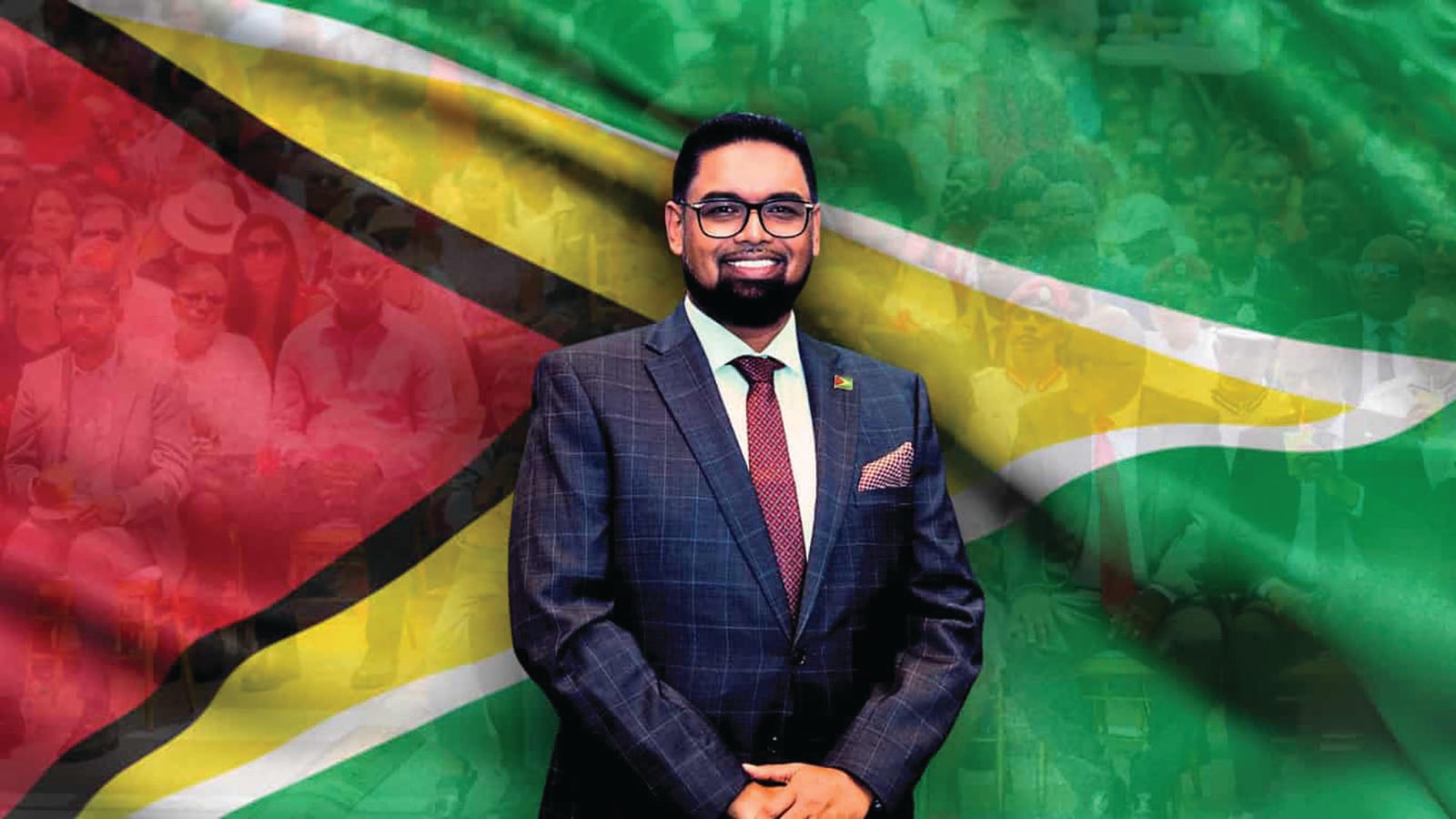
President Dr Mohamed Irfaan Ali has been appointed a Commonwealth Champion of Biodiversity, a recognition granted during the Commonwealth Heads of Government Meeting held in Antigua and Barbuda on the sidelines of the launch of King Charles III's Commonwealth Nature Initiative.
The Office of the President announced the appointment in a brief statement on Wednesday, saying the role strengthens Guyana's hand in mobilising global action through the Global Biodiversity Alliance and in shaping a future where conservation delivers real economic opportunities across the Commonwealth and beyond, according to Guyana Times.
A platform built in Georgetown
The Global Biodiversity Alliance, pioneered by Ali, was launched in July 2025 and now counts almost 150 members. Guyana hosted the Alliance's second conference just last week, drawing researchers, financial institutions and policymakers to Georgetown with a stated aim of closing the financing gap for nature protection.
The summit coincided with a two-day state visit by King Charles to Guyana before he travelled on to this year's CHOGM. While in Georgetown, the King visited the Arthur Chung Conference Centre, where conservation leaders had gathered for the conference, and commended Ali for pushing the biodiversity agenda.
“I just wanted to say how much I admire what is happening here in Guyana. And I look forward so much to seeing how the balance can be struck between development and conservation and nature regeneration,” the King said on October 30.
He also praised Guyana's environmental stewardship, arguing the country deserves to be rewarded for keeping its forests intact.
“Here in Guyana, you have the most wonderful example of a really special treasure of natural species. You've managed to keep some enormous percentage of your forests. That is an incredible achievement and, of course, deserves to be rewarded,” King Charles said.
From Iwokrama to LCDS 2030
The King's ties to Guyana's environmental work run long. He last visited in 2000 as Prince of Wales and became a patron of the Iwokrama International Centre for Rain Forest Conservation and Development. He also played a part in shaping Guyana's Low-Carbon Development Strategy, launched in 2009 under the Bharrat Jagdeo presidency and later expanded by the Ali administration.
LCDS 2030, rolled out in 2022, builds on that original framework and sets out how Guyana can prepare for potential revenue streams from other ecosystem services, including biodiversity. The logic is straightforward: a country that keeps its forests standing should be able to monetise that choice without sacrificing growth. For a small economy with vast natural assets, that is not sentiment; it is strategy.
What the Commonwealth Nature Initiative does
The CNI, launched by King Charles on Monday, is an international conservation effort backed by an initial pledge of US$202.2 million to help middle- and low-income Commonwealth countries accelerate progress toward the global 30×30 target, which calls for conserving at least 30 per cent of the world's lands and oceans by 2030.
Speaking at the launch, Ali argued that the Commonwealth has an important role to play in conserving the world's biodiversity resources and outlined a vision for greater collaboration among member states on biodiversity science, financing and knowledge sharing, Guyana Chronicle reported.
Ali told the gathering that Commonwealth countries can take Guyana's LCDS and GBA agendas as examples of how environmental financing and conservation can reinforce each other rather than compete. He added that Commonwealth states are well placed to connect countries rich in natural assets with the financial and scientific resources needed to protect them.
Conservation as an economic proposition
The President's framing deserves attention here. He has consistently argued that biodiversity conservation is not merely an environmental issue but a development imperative that must be tied to jobs, economic opportunity and improved livelihoods. That argument, when made credibly, is the strongest case against the tired assumption that poor countries must choose between cutting down their forests and staying poor.
It also aligns with the approach Guyana has taken for nearly two decades: put a price on standing forests, attract investment for ecosystem services, and let private and public capital do the work that speeches alone cannot. The alternative, a world where conservation is funded by permanent transfers from rich governments, has never been sustainable and never will be.
Practical steps have already been agreed, including an investment and finance forum expected to be held in London next year. Ali also cited plans for a new Commonwealth-led mechanism headquartered in Guyana, which would place the country at the centre of a global financing architecture for nature, according to EIN Presswire.
The appointment, in that sense, is less a ceremonial honour than a seat at the table where the rules of conservation finance are being written. Guyana now has a chance to shape them.
FAQ
What is the Commonwealth Champion of Biodiversity role?
It is a recognition granted to President Ali for his advocacy of biodiversity conservation and sustainable development, announced during CHOGM in Antigua and Barbuda alongside the launch of the Commonwealth Nature Initiative.
What is the Global Biodiversity Alliance?
The GBA was launched by President Ali in July 2025 and now has almost 150 members. Guyana hosted its second conference in Georgetown, aiming to close the financing gap for nature protection.
What is the 30×30 target?
It is a global goal to conserve at least 30 per cent of the world's lands and oceans by 2030. The Commonwealth Nature Initiative carries a US$202.2 million initial pledge to help member states reach it.
When will the investment and finance forum be held?
President Ali said the forum is expected to be held in London next year, as part of agreed practical steps under the Commonwealth's biodiversity agenda.