
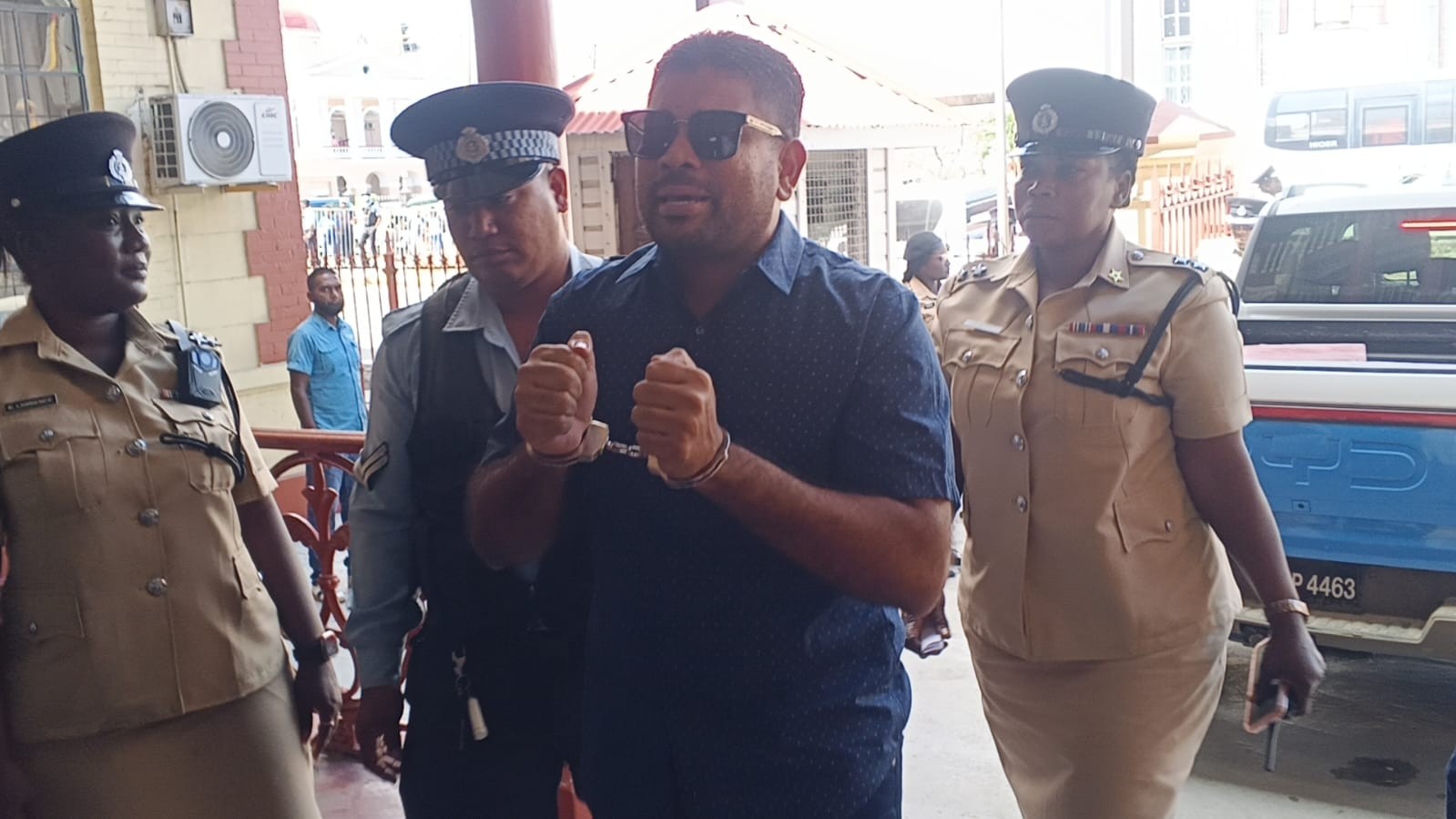
The Guyana Prison Service said on Monday that official logs show remanded Opposition Leader Azruddin Mohamed spent approximately nine hours and 20 minutes outside his holding area on Sunday, 1st November, directly contradicting claims by his family that he was confined for 23 hours and 50 minutes each day.
The Prison Service released a detailed timeline of Mohamed's daily regime at the Lusignan Prison, describing the near-24-hour confinement claim as completely inconsistent with institutional records, according to Kaieteur News. The disclosure is the latest exchange in an increasingly public dispute over the conditions under which the opposition figure is being held.
What the prison records show
According to the Prison Service, Mohamed underwent standard admission processing on Saturday, 31st October. He was briefed on prison regulations and general expectations, received visits from family members and legal counsel, and was permitted a telephone call to a relative lasting about 16 minutes.
The timeline logged for Sunday, 1st November, is more detailed. Mohamed was unlocked at 06:00 hrs for morning hygiene, and a relative delivered his breakfast directly to him at 06:40 hrs. He then attended a welfare counselling session lasting roughly an hour and a half.
During the day, he was granted three separate telephone calls to family members totalling about 29 minutes, and received a two-hour visit from one of his attorneys, during which a relative handed over lunch. After afternoon hygiene privileges at 15:35 hrs, he was seen by a medical officer at 15:55 hrs and given cough medication. He was also supplied with reading and writing materials in his unit.
At 19:00 hrs that evening, Director of Prisons Nicklon Elliot visited Mohamed in person. The Prison Service said that during that visit, Mohamed indicated he had no complaints about his treatment or conditions. Routine security checks were conducted periodically through the night.
Summing up the entries, the administration said the documented record shows Mohamed spent about nine hours and 20 minutes outside his holding area on Sunday alone, and that any assertion of near-24-hour confinement on that day is inconsistent with the logs. INews Guyana reported the Prison Service's rejection of what it called claims of inhumane treatment, citing the same documented figures.
The family's allegations
The release comes against the backdrop of serious allegations from Mohamed's family about his treatment since he was remanded to Lusignan. Following a visit to the facility, his sister, Hadiyyah Mohamed, told Kaieteur News the family feared for his safety and accused the Government of political victimisation.
She alleged that Mohamed was being kept in Building 5, a maximum-security section of the prison, in a cramped cell with no windows or adequate ventilation. She claimed he was confined for 23 hours and 50 minutes daily, with bright overhead lighting kept on continuously.
Hadiyyah also alleged that physical restraints had caused swelling and bruising to her brother's hands and feet, and she raised concerns about the psychological toll of his detention. The family said Mohamed initially refused prison-provided meals because he feared possible poisoning or the administration of medication without his consent. They called on Home Affairs Minister Oneidge Walrond and prison management to guarantee his safety.
High-profile classification, not punishment, says GPS
The Prison Service has previously rejected allegations of punitive, degrading or unlawful treatment, maintaining that Mohamed is managed under established prison protocols and the United Nations Nelson Mandela Rules.
Following his admission on Friday, 30th October, Mohamed was assessed through the Prison Management Offenders System and classified as a high-profile prisoner. The service said this classification determined his housing and supervision arrangements and was not intended as punishment. He was examined by a medical officer and seen by a welfare officer on arrival.
On Saturday, after a meeting between Acting Assistant Director of Prisons (Operations) Deoraj Gyandat and Mohamed's family, approval was granted for designated relatives to supply home-cooked meals, subject to security checks. NCN Guyana reported the Prison Service's rejection of the confinement claims, noting the records showing more than nine hours outside the cell on Sunday.
Director of Prisons Nicklon Elliot and Officer-in-Charge Seon Charles also conducted a welfare check on Saturday. During that engagement, Mohamed's request to telephone his son ahead of the boy's birthday was granted, and adjustments were made to a ceiling fan serving his cell block.
Why the dispute matters
The war of words over Mohamed's conditions goes beyond one prisoner's cell. When a remanded opposition leader's treatment becomes a matter of duelling press releases, the credibility of state institutions is on the line alongside the rights of the detainee.
The Prison Service's answer is documentary: admission logs, medical visits, telephone records, counselling sessions, and a director-level visit, all timestamped. If those records are accurate, the family's most dramatic claim, near-continuous isolation, does not hold. Guyana Chronicle reported that the GPS published the prison regime details specifically to debunk the confinement claim.
But records kept by an institution accused of wrongdoing are, by definition, self-serving evidence. An independent inspection, whether by the judiciary, a human rights body, or international observers, would settle the question far more convincingly than any press release. Guyana's standing as a democracy that respects due process is best served by transparency from outside the prison walls, not just within them.
Mohamed, like anyone in state custody, is entitled to treatment consistent with the law and with the Nelson Mandela Rules. He is also entitled to the presumption of innocence. Equally, those making serious allegations against state institutions bear a responsibility to present evidence, not only fear.
The Prison Service closed its release by reaffirming its commitment to treating Mohamed, like every person in its custody, in accordance with the law, established procedures and applicable standards, while maintaining the security and good order of the institution. Whether that commitment withstands independent scrutiny is the question that now hangs over Lusignan.
FAQ
How long did Azruddin Mohamed spend outside his holding area on Sunday, 1st November?
The Guyana Prison Service said official records show he spent approximately nine hours and 20 minutes outside his holding area that day.
What did Mohamed's family allege about his detention conditions?
His sister Hadiyyah Mohamed alleged he was confined for 23 hours and 50 minutes daily in a cramped, windowless cell in a maximum-security section, with continuous bright lighting, and that restraints caused swelling and bruising to his hands and feet.
How has the Prison Service responded to the allegations?
The GPS rejected claims of punitive or degrading treatment, saying Mohamed is managed under established protocols and the UN Nelson Mandela Rules, with his high-profile classification determining housing and supervision rather than serving as punishment.