
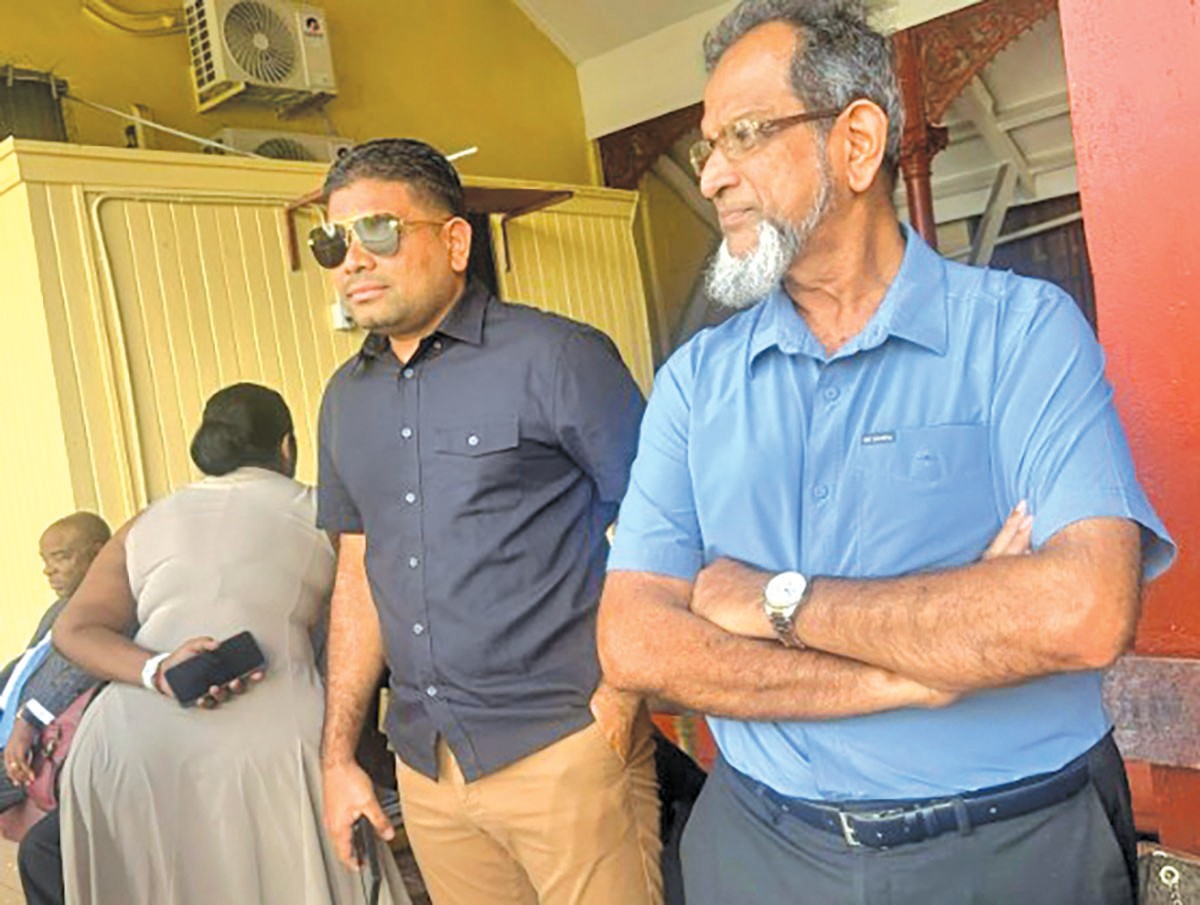
Chief Magistrate Judy Latchman refused on Monday, November 3, 2026, to revoke the bail of Opposition Leader Azruddin Mohamed and his father, Nazar Mohamed, ruling that unproven allegations and pending charges cannot justify keeping the US-sanctioned duo in detention while extradition proceedings continue.
At the hearing at the Georgetown Magistrates' Courts, Latchman accepted that she had the legal power to revoke bail but found that the prosecution, acting for the United States, had not presented sufficient grounds to exercise it, according to Guyana Times.
What the Chief Magistrate decided
“I do not find that past conduct without a conviction or pending charges without a conviction is sufficient to warrant a revocation of bail,” Latchman said from the bench.
“In these circumstances, bail is maintained for the Mohameds in relation to this matter,” she ruled. She added a warning that a conviction in another proceeding could change the calculus later: “If they are convicted while this matter is still ongoing, that conviction may very well have some bearing on an application for revocation at that stage.”
Demerara Waves reported that the US prosecutors had framed their application around what they called a “pattern” of alleged offences, an argument the Magistrate declined to accept as a basis for detention before trial.
Why the US asked for revocation
The application followed concerns raised by Jamaican King's Counsel Terrence Williams, who represents the United States in the extradition proceedings. He told the court that two incidents since the previous hearing had raised fears of witness interference.
“Since the last day we were here, there have been two incidents which touch our concern,” Williams said, describing the prosecution's worry as “the interference of the witnesses.”
The first incident was the October 12 shooting outside the Kitty residence of Senior Superintendent of Police Prem Narine, head of the Special Branch Unit and a main prosecution witness. Narine was at home when a vehicle carrying Azruddin and two members of his staff was seen nearby. Gunfire was reportedly exchanged, and police later intercepted the vehicle. Azruddin, his videographer Mario Mohamed and his driver Eugene Thorne were charged with unlawful possession of a firearm and ammunition and attempting to obstruct the course of justice. All three pleaded not guilty and received $750,000 bail each, with conditions barring contact with Narine and his family.
The second incident involved an alleged $800,000 payment by Azruddin to a police constable for footage of the shooting taken from the Guyana Police Force's Safe Country surveillance system. That alleged transaction produced a separate case in which Azruddin and Constables Ryan Greene and Ashton Chappelle were charged under Section 9(2)(b) of the Cybercrime Act with unauthorised transfer of electronic data. They were remanded until November 24.
Williams also cited alleged threats involving Nazar Mohamed, described what he called a social media campaign targeting prosecution witnesses, and told the court that Narine feared for his life and his family's safety.
The defence argument on the Bail Act
Senior Counsel Roysdale Forde, appearing for the father and son, opposed the application and argued that the prosecution had failed to establish any legal basis for revocation. He submitted that the Bail Act did not empower the Magistrate to revoke bail, distinguishing revocation from the variation of bail conditions. “Those are conditions of bail and not bail itself,” he argued.
Forde noted that the conditions attached to the separate firearm case already barred Azruddin from intimidating or contacting prosecution witnesses, visiting Narine's home or contacting the officer's family. He maintained that no violation had been alleged.
“No breach of these conditions has been alleged and no breach of these conditions have occurred,” he said. He added that the new charges remained nothing more than allegations.
“Every one of them, your worship, at this stage is nothing more than allegation. Each charge is denied, and under Article 144(2) of the Constitution of Guyana, my clients are presumed innocent in respect of all of them,” Forde told the court.
When Latchman asked whether the additional charges suggested a pattern of further offending, Forde replied that the allegations were unproven, denied that Nazar had threatened Narine, and pointed out that the prosecution had not appealed the earlier bail decision.
The US case behind the extradition request
The United States sanctioned Azruddin Mohamed, Nazar Mohamed and several businesses linked to them in 2024, including Mohamed's Enterprise, Hadi's World and Team Mohamed's Racing Team. The sanctions stemmed from allegations of a gold-export tax evasion scheme involving underreported gold exports and evaded taxes and royalties.
US prosecutors are seeking extradition to face an 11-count federal indictment in Florida charging wire fraud, mail fraud, money laundering, conspiracy and customs-related offences. They allege that between 2017 and June 2024, the Mohameds participated in a scheme involving more than 10,000 kilograms of gold, falsified customs declarations and the reuse of official export seals, depriving Guyana of more than US$50 million in taxes and royalties.
A separate indictment alleges that a Lamborghini purchased for US$680,000 was imported into Guyana with an invoice declaring its value at US$75,300, resulting in the alleged evasion of more than US$1 million in taxes.
Both men deny the allegations and are contesting extradition. They remain on bail of $150,000 each, with conditions requiring them to surrender their passports and report weekly to the Ruimveldt Police Station. The defence team includes Forde and attorneys Siand Dhurjon and Damien DaSilva. The US team includes Williams, Jamaican attorneys Herbert McKenzie and Celine Deidrick, and Guyanese attorney Glenn Hanoman.
What happens next in the case
The extradition hearing resumes on Tuesday, November 4, when Narine is expected to face further cross-examination from Forde. Monday's ruling means both Mohameds remain free on bail in the extradition matter, though Azruddin remains remanded in the separate cybercrime case until November 24, as News Americas Now reported.
The ruling is a sober reminder that Guyana's courts, whatever the political heat around this case, still insist that accusation is not conviction. That standard protects every accused person, not only the powerful, and it is a standard worth defending.
FAQ
Did the Chief Magistrate revoke bail for Azruddin Mohamed?
No. On November 3, 2026, Chief Magistrate Judy Latchman maintained bail for both Azruddin and Nazar Mohamed in the extradition matter, ruling that unproven allegations and pending charges did not justify revocation.
Why is the US seeking the Mohameds' extradition?
The US wants them to face an 11-count federal indictment in Florida alleging gold-export fraud, money laundering and customs offences that prosecutors say deprived Guyana of more than US$50 million in taxes and royalties.
Is Azruddin Mohamed still in custody?
He remains remanded in a separate cybercrime case until November 24, but he stays on bail in the extradition proceedings themselves.