
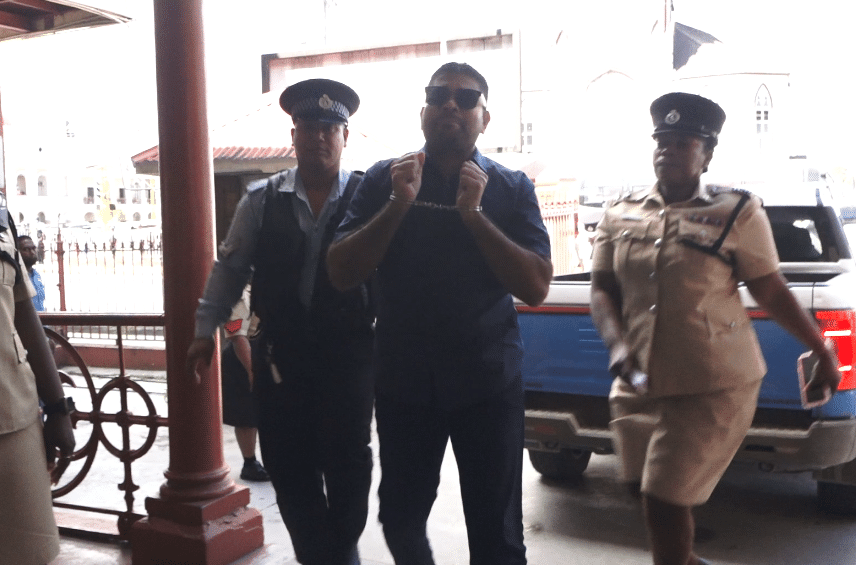
Chief Magistrate Judy Latchman on Monday refused a prosecution request to revoke the bail of Opposition Leader Azruddin Mohamed and his father, Nazar Mohamed, ruling that unproven allegations and pending charges cannot justify depriving the two men of their liberty.
The decision came at the Georgetown Magistrates' Courts during the ongoing United States extradition proceedings against the Mohameds, and it preserves their freedom, on strict conditions, while the case continues. Latchman accepted that she held the power to revoke bail but found the prosecution had not presented sufficient grounds to exercise it, according to INews Guyana.
What the Chief Magistrate ruled
Latchman's reasoning was direct: the presumption of innocence still means something in Guyana's courts, and the state cannot lock people up on the strength of accusations alone.
I do not find that past conduct without a conviction or pending charges without a conviction is sufficient to warrant a revocation of bail.
She then ruled: In these circumstances, bail is maintained for the Mohameds in relation to this matter.
The magistrate left the door open to a future application, noting that a conviction in another matter could change the calculus. If the Mohameds are convicted while the extradition case is still ongoing, that conviction may very well have some bearing on a later bid to revoke bail, she said.
Why the prosecution asked for revocation
The application, argued by Jamaican King's Counsel Terrence Williams, rested on two incidents since the previous hearing that he said pointed to possible interference with witnesses.
Since the last day we were here, there have been two incidents which touch our concern, Williams told the court, describing the prosecution's worry as the interference of the witnesses.
The first was the October 12 shooting outside the Kitty residence of Senior Superintendent of Police Prem Narine, head of the Special Branch Unit and a main prosecution witness in the extradition proceedings. The court heard that Narine was at home when a vehicle carrying Azruddin and two members of his staff was seen nearby. Gunfire was reportedly discharged, and Narine returned fire. Police later intercepted the vehicle a short distance away. Guyana Times reported that the incident fed directly into a separate criminal case.
Azruddin was charged jointly with his videographer, Mario Mohamed, and driver, Eugene Thorne, with unlawful possession of a firearm and ammunition and attempting to obstruct the course of justice. All three pleaded not guilty and were each granted $750,000 bail, with conditions requiring them to stay away from Narine and his family.
The second incident Williams raised involved alleged police corruption: an alleged $800,000 payment by Azruddin to a constable for footage of the shooting from the Guyana Police Force's Safe Country surveillance system. That alleged transaction produced yet another case, this one charging Azruddin and Police Constables Ryan Greene and Ashton Chappelle with unauthorised transfer of electronic data under Section 9(2)(b) of the Cybercrime Act. They were remanded until November 24.
Williams also cited alleged threats involving Nazar Mohamed and what he described as a social media campaign targeting prosecution witnesses. He told the court that Narine feared for his life and the safety of his family.
Notably, the prosecution ultimately sought revocation of Azruddin's bail alone, having initially raised the application against both men.
The defence: allegations are not evidence
Senior Counsel Roysdale Forde, appearing for the father and son, opposed the application and argued the prosecution had failed to establish any legal basis for revocation.
Your worship, we wish to start off by saying that we oppose the application made by the prosecution in this matter, Forde told the court.
He submitted that the Bail Act did not empower the magistrate to revoke bail, distinguishing revocation from varying bail conditions. Those are conditions of bail and not bail itself, he argued.
Forde reminded the court that the conditions imposed in the separate firearm case already barred Azruddin from intimidating or contacting prosecution witnesses, from visiting Narine's home or contacting the officer's family. He insisted no breach had been shown.
No breach of these conditions has been alleged and no breach of these conditions have occurred.
On the new charges, Forde was categorical. Every one of them, your worship, at this stage is nothing more than allegation, he said. Each charge is denied, and under Article 144(2) of the Constitution of Guyana, my clients are presumed innocent in respect of all of them.
He argued the prosecution had to produce actual evidence to justify taking away a person's liberty, not simply pile on accusations. He denied that Nazar had threatened Narine, and noted that the prosecution had never appealed the earlier decision granting bail.
Asked by Latchman whether the additional charges suggested a pattern of further offending, Forde answered that the allegations remained unproven.
Why this ruling matters
The ruling is a check on a prosecution strategy that increasingly looks designed to bury the Mohameds under a stack of interlocking charges, each one still unproven, and to use those charges as leverage in the extradition fight. Latchman's decision says the state must prove its cases one by one, in court, before it can take a person's freedom.
That principle protects everyone, not just a US-sanctioned opposition leader. If pending charges were enough to revoke bail, no accused person in Guyana would be safe from pre-emptive detention whenever prosecutors filed fresh papers. The constitutional presumption of innocence, Article 144(2), would become a dead letter.
The context is unavoidable. Azruddin Mohamed is under United States sanctions and faces extradition, and the cases piling up around him, firearms, obstruction, an alleged data leak, now a shooting outside a police witness's home, have turned a courtroom into a political arena. Demerara Waves reported that prosecutors framed the application around an alleged pattern of offences. HGPTV confirmed that Latchman declined to revoke the existing bail after hearing both sides.
Citizens can reasonably ask whether the police force's own conduct, including the alleged sale of surveillance footage by serving constables, deserves the same scrutiny as the accused. A constable allegedly selling Safe Country footage for $800,000 is not a story about one opposition politician; it is a story about institutions that leak, and about who gets charged when they do.
What happens next
Both Mohameds remain on bail as the extradition proceedings continue. Narine is expected to face further cross-examination by Forde when the extradition hearing resumes on Tuesday, November 3.
Frequently asked questions
Did the Chief Magistrate revoke Azruddin Mohamed's bail?
No. Chief Magistrate Judy Latchman refused the prosecution's application on Monday, November 2, and maintained bail for both Azruddin and Nazar Mohamed.
Why did the prosecution want the bail revoked?
Prosecutor Terrence Williams cited the October 12 shooting outside prosecution witness Prem Narine's home, an alleged $800,000 payment for police surveillance footage, alleged threats, and a social media campaign he said targeted witnesses.
What did the magistrate say about future applications?
Latchman said a conviction in another matter while the extradition case is ongoing could have a bearing on a future application to revoke bail.
When does the extradition hearing resume?
The hearing resumes on Tuesday, November 3, with Senior Superintendent Prem Narine facing further cross-examination by Senior Counsel Roysdale Forde.