
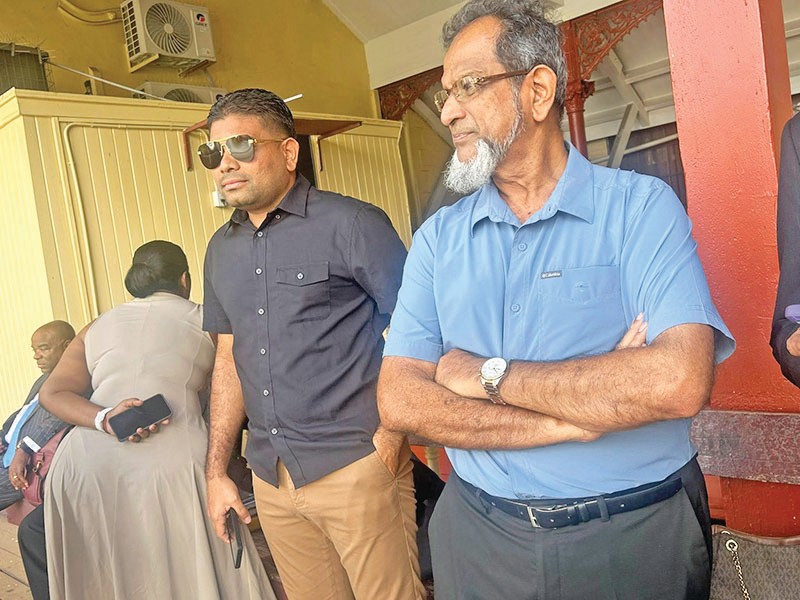
Guyana’s higher courts have rejected most legal challenges by Azruddin and Nazar Mohamed, but their United States extradition hearing remained on its first witness as of November 20, 2026.
The committal proceedings before Chief Magistrate Judy Latchman at the Georgetown Magistrates’ Courts began on January 6, 2026. The Mohameds were arrested and granted bail in October 2025 after Washington sought their extradition over an alleged US$50 million gold smuggling and tax evasion scheme, according to Guyana Times.
A succession of courtroom defeats
Azruddin Mohamed, Guyana’s Opposition Leader, and his father, Nazar Mohamed, have pursued several challenges without stopping the substantive case. An earlier Full Court appeal was withdrawn on January 15, 2026, with costs awarded against them.
On February 4, Chief Justice Navindra Singh dismissed proceedings against the Minister of Home Affairs, the Attorney General and Magistrate Latchman. He awarded G$500,000 in costs to each respondent. The High Court dismissed another challenge on February 24, and the Court of Appeal rejected a separate challenge on March 17.
The Caribbean Court of Justice dismissed their appeal on July 29. Guyana Chronicle reported that those higher-court decisions contrast with the unresolved proceedings before the magistrate, more than 10 months after the hearing began.
The prosecution is still presenting its evidentiary case. INews Guyana reported that the court had yet to finish hearing the first prosecution witness, with legal challenges contributing to the delay. The central issue is no longer whether the higher courts will entertain each challenge, but whether the magistrates’ court can complete the evidence within a reasonable period.
Why the Mohameds’ bail is under scrutiny
The extradition court has also faced repeated prosecution requests to revoke bail, which stands at $150,000 for each man. Magistrate Latchman has refused those applications three times, including after fresh police investigations and criminal charges.
In September 2026, prosecutors sought revocation after police investigated suspicious activity near President Irfaan Ali’s private residence at Leonora, West Coast Demerara. Police detained and questioned Azruddin Mohamed on September 3 after intercepting two heavily tinted vehicles and finding a drone.
Mohamed denied owning the device and was released. His video editor, Dwayne Ross, was later charged with three drone-related offences, including allegedly flying over the president’s residence without authorisation. Ross received $600,000 bail.
A second request to revoke the Mohameds’ bail was denied on November 2. In her decision, the magistrate addressed the evidential threshold she considered necessary.
“I do not find that past conduct without a conviction or pending charges without a conviction is sufficient to warrant a revocation of bail,” Magistrate Latchman said.
That ruling followed an October 12 incident near the Georgetown home of Senior Superintendent Prem Narine, a senior police officer and key witness in the extradition proceedings. Police said Narine reported hearing what he believed was a gunshot as a vehicle passed his residence. He fired his service weapon towards the vehicle.
Officers later intercepted the car and detained Azruddin Mohamed and two other men. Investigators reported recovering a .32-calibre pistol without a serial number and three live rounds of ammunition.
On October 30, Mohamed, 39, and Constable Ryan Greene, 20, appeared before Magistrate Abigail Gibbs at the Sparendaam Magistrate’s Court. They were charged with unauthorised disclosure of electronic data under Guyana’s Cybercrime Act.
Prosecutors allege that Greene, who worked at the Guyana Police Force’s Command Centre, extracted footage from the government’s Safe City surveillance network and sold it to Mohamed for $800,000. Both men were denied bail and remanded until November 24. Neither entered a plea because the charge is indictable. A conviction carries a possible sentence of up to five years in prison and an G$8 million fine.
On November 3, Magistrate Latchman refused for a third time to revoke the extradition bail. Prosecutors cited additional criminal allegations involving firearms, obstruction of justice and breaches of the Cybercrime Act.
The Director of Public Prosecutions has since started judicial review proceedings against the magistrate’s November decisions. The DPP argues that she applied the wrong legal test. The dispute turns on a basic distinction: deciding criminal guilt is different from deciding whether changed circumstances justify revoking bail. A conviction is not necessarily required for bail to be reconsidered, although the applicable law and evidence must support revocation.
The US indictment behind the extradition request
The proceedings arise from a federal indictment unsealed on October 6, 2025, in the Southern District of Florida. The charges include wire fraud, mail fraud, money laundering, conspiracy and customs-related offences.
US prosecutors allege that between 2017 and June 2024, the Mohameds took part in a scheme to evade Guyanese export taxes and royalties on more than 10,000 kilograms of gold. They accuse the men of using falsified customs declarations and reusing export seals.
The indictment also cites an attempted shipment of US$5.3 million in undeclared gold seized at Miami International Airport. It separately alleges the under-invoicing of a luxury vehicle worth more than US$680,000.
The US Treasury Department sanctioned the Mohameds and their company, Mohamed’s Enterprise, in June 2024 over allegations of corruption, gold smuggling and tax evasion. Guyana received the formal extradition request on October 30, 2025, under treaty arrangements applied through the Fugitives Offenders Act.
What happens next
Two judicial tracks now demand attention. The magistrates’ court must continue hearing the prosecution’s evidence, while the High Court will consider the DPP’s challenge to the bail decisions. Neither process determines the truth of the American allegations.
For Guyana, the case carries institutional stakes beyond two prominent defendants. Extradition depends on courts applying treaty obligations consistently, protecting due process and handling evidence without avoidable delay. Those requirements are compatible, and the coming hearings will show how effectively the system delivers them.
Frequently asked questions
Why does the US want the Mohameds extradited?
US prosecutors accuse Azruddin and Nazar Mohamed of fraud, money laundering, conspiracy and customs offences connected to an alleged US$50 million gold smuggling and tax evasion scheme. The allegations have not been tried in the United States.
Has Guyana’s extradition court decided the case?
No. As of November 20, 2026, the first prosecution witness was still giving evidence before Chief Magistrate Judy Latchman. The higher-court rulings concerned legal challenges, not a final extradition decision.