
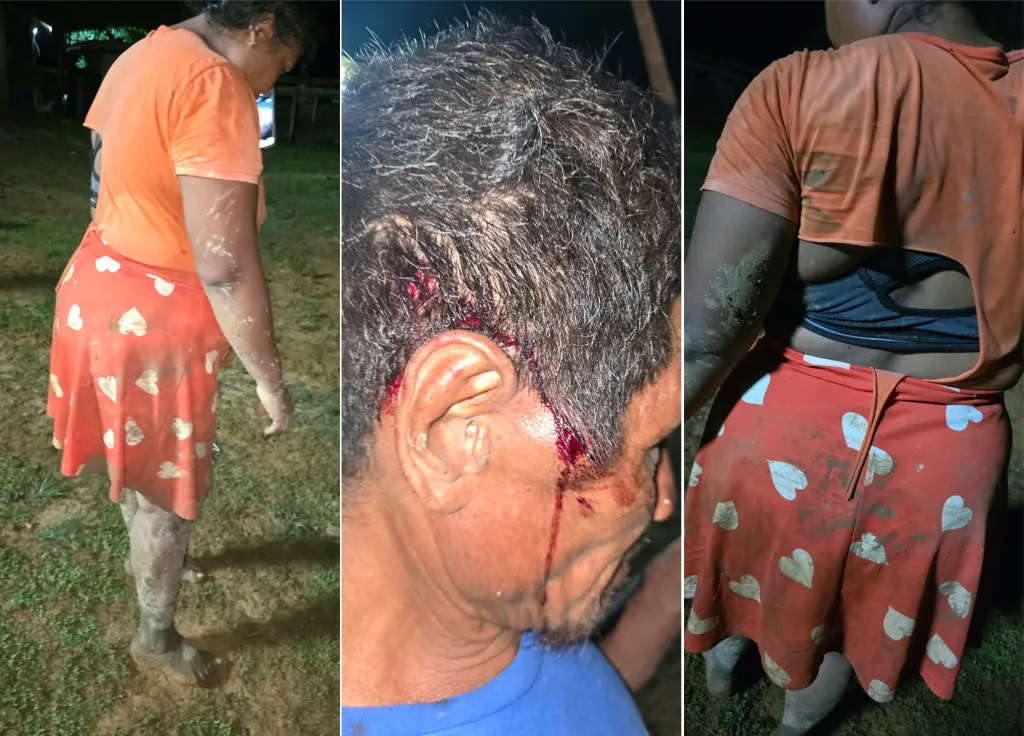
The South Rupununi District Council demanded an impartial investigation on November 17, 2026, into the reported assault and arrest of Chinese Landing Toshao Nikita Miller and the treatment of villagers.
The council, which represents 21 Wapichan communities, also sought action on a land dispute that has remained unresolved for more than 30 years. Its statement, adopted at a General Assembly in Aishalton Village, condemned allegations of assaults, aggressive force, arrests and the seizure of personal property, Kaieteur News reported.
What the South Rupununi council is demanding
The SRDC directed its demands to the Government of Guyana, law enforcement authorities, the Ministry of Amerindian Affairs, the National Toshaos Council and the mining company involved. It wants a thorough, transparent and impartial examination of every allegation arising from the confrontation, including reported assaults, alleged firearm use, injuries and the confiscation of property.
Miller and other villagers were granted bail after appearing in court on November 17, while another villager was remanded, the council acknowledged. It called for fair and expeditious treatment and due process for those charged.
The council also asked authorities to explain the legal basis for seizing Miller’s legally issued firearm and personal telephone, and to confirm where both items are being held. Its other demands include:
- An appropriate public apology from the relevant authorities for Miller’s treatment.
- A public response from the mining company to allegations involving its operators and workers, with responsibility accepted for wrongdoing established by an impartial investigation.
- Immediate government intervention to settle the land dispute and implement recommendations from the Inter-American Commission on Human Rights.
- An expedited, consultative revision of the Amerindian Act and stronger legal safeguards for Indigenous leaders.
The SRDC described Miller as a democratically elected leader entrusted by her community with its protection and representation. It said the reports raised serious questions about respect for Indigenous leadership and the practical protection of Indigenous rights.
“Such treatment of an Indigenous leader is simply unacceptable and must not be normalized,” the council stated.
A land dispute lasting more than 30 years
At the centre of the confrontation is Chinese Landing’s long-running dispute with businessman Wayne Vieira. The SRDC questioned why repeated requests for intervention had failed to produce a satisfactory settlement and why authorities had allowed a matter of such importance to remain unresolved for decades.
The council maintains that the lands have been legally recognised since 1976 and are protected by Guyana’s Constitution, the Amerindian Act and international instruments ratified by the country. It condemned what it called encroachment by miners on private property and Indigenous titled lands.
That distinction between enterprise and arbitrary power matters beyond Chinese Landing. Investment depends on clear titles, predictable enforcement and courts that apply the same rules to villagers, miners and officials. A title that can be disregarded for three decades offers weak security to its holders and little certainty to anyone investing around it.
The SRDC acknowledged that some Indigenous villagers depend on mining for their livelihoods. It nevertheless argued that economic considerations cannot justify violence, intimidation, disregard for village authority or unlawful entry onto private and titled lands.
Silence and a retracted statement
The council reserved some of its sharpest criticism for institutions that it said had failed to support Chinese Landing. It described the silence of the Ministry of Amerindian Affairs, the National Toshaos Council and other Indigenous representative bodies as “deafening”.
It also criticised the Indigenous Peoples Commission for initially issuing a statement supporting Chinese Landing and later retracting it. The SRDC said that failing to speak amounted to condoning the alleged actions and neglecting a duty of solidarity.
Other organisations have already responded to the violence. Demerara Waves reported that the Amerindian Peoples Association and the Guyana Gold and Diamond Miners Association issued separate calls following violence among Chinese Landing residents and Kariako miners. The association condemned attacks on Miller and community residents that it attributed to miners.
The SRDC rejected suggestions that its own demands were politically motivated. Its case rests instead on equal enforcement: allegations of assault require investigation, people charged with offences require due process, and official seizures require a stated legal basis.
International commitments and domestic enforcement
The council cited the United Nations Declaration on the Rights of Indigenous Peoples, the Constitution, the Amerindian Act and the Inter-American Commission’s recommendations concerning Chinese Landing. It questioned the value of those commitments if communities continued to face encroachment, intimidation and inadequate protection.
“International commitments must be translated into meaningful domestic protection, legislation and action,” the council said.
It insisted that the commission’s recommendations must not be ignored or treated as optional. It also argued that an overdue revision of the Amerindian Act should proceed through consultation, rather than leaving Indigenous rights as promises on paper.
The warning extends to other villages. The SRDC said its own Toshaos and village leaders had faced threats and intimidation, including threatening behaviour involving outside miners. It pointed to growing interest in Indigenous lands for mining, oil and gas, agriculture, conservation and other commercial activities.
For Guyana, the immediate test is narrower and more concrete: establish what happened, disclose the basis for official actions and settle the underlying title dispute. The council closed its statement with a direct warning.
“Enough is enough. Our lands, our leaders and our people deserve respect. Our rights must be upheld, not merely acknowledged. And this must not happen again,” the statement concluded.
Frequently asked questions
Who is Chinese Landing Toshao Nikita Miller?
Nikita Miller is the elected Toshao of Chinese Landing. The SRDC says she was entrusted by her community to protect and represent it, and it has condemned her reported assault and arrest.
What happened to Miller and the other villagers in court?
Miller and other villagers appeared in court on November 17, 2026, and were granted bail. Another villager was remanded, according to the SRDC, which has demanded due process for everyone charged.
Why is the Chinese Landing land dispute significant?
The dispute involving Chinese Landing and businessman Wayne Vieira has lasted more than 30 years. The council says the lands have been legally recognised since 1976 and wants government intervention, enforcement of Indigenous titles and implementation of the Inter-American Commission’s recommendations.