
Asthma affects an estimated 10 to 15 percent of children and adults in Guyana, according to programme materials from the Georgetown Public Hospital Corporation's Spirometry and Asthma Education Program cited by Guyana Times health reporting on November 23, 2026. The figure is a programme estimate, and the true national prevalence remains uncertain, but it points to a condition that touches most streets and most families in the country.
The same report sets out what patients and parents can do about it: recognise the pattern, know which inhaler does what, and act fast when breathing fails. Asthma is a long-term lung condition in which the airways become inflamed and sensitive. During a flare-up, the muscles around them tighten, making it harder to move air out of the lungs.
How common is asthma in Guyana?
The World Health Organisation estimates that 363 million people lived with asthma in 2023 and 442,000 died from it, according to the Guyana Times report. Asthma is the most common chronic disease among children, and it can also begin in adulthood.
For Guyana, the Georgetown hospital programme's 10 to 15 percent estimate is the best figure in circulation, though it is not a national survey. That gap matters. Without reliable prevalence data, clinics plan blind and patients go undiagnosed.
What triggers an asthma attack in Guyanese homes and workplaces?
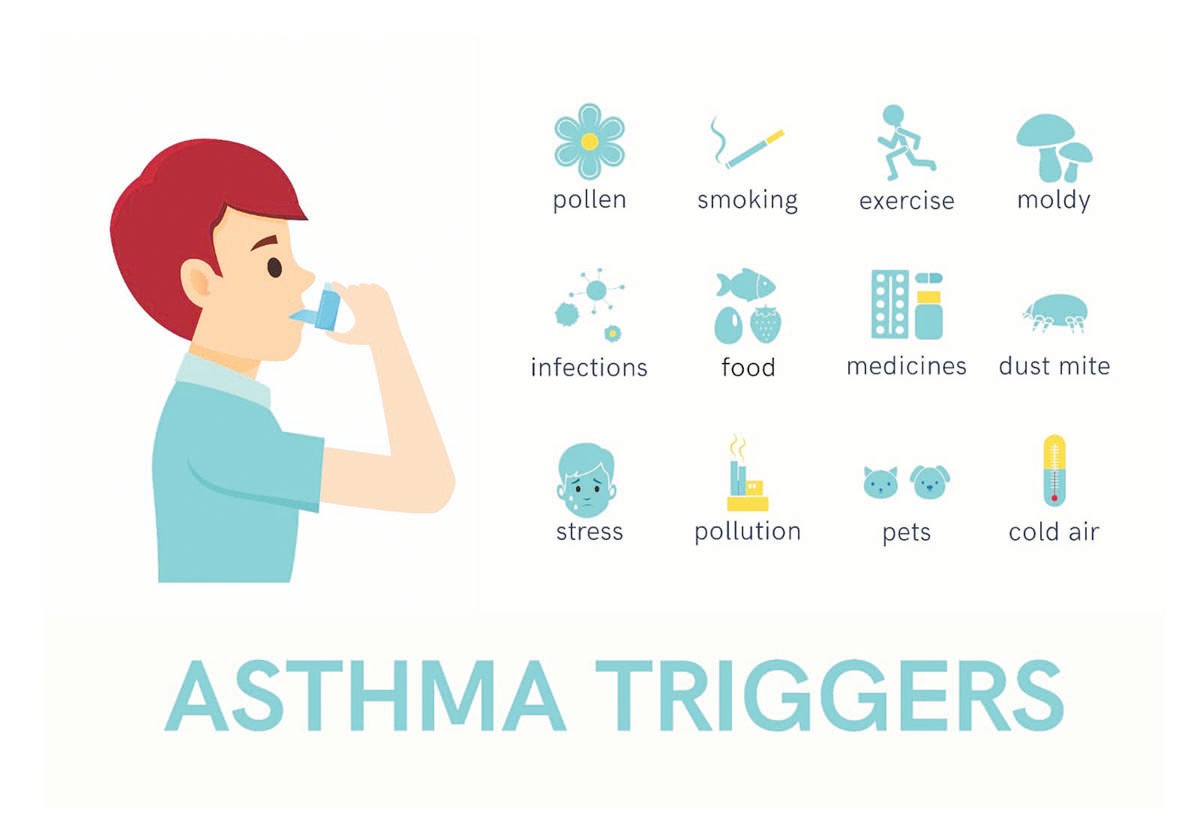
Triggers vary from person to person. One patient may wheeze after a cold; another develops a tight chest around a particular cleaning spray. In Guyana, the report flags smoke from burning rubbish, cigarette smoke, roadside dust, insect sprays, paint fumes and mould after heavy rain as common culprits. Respiratory infections and exercise can also bring on symptoms.
Some risk factors are inherited. Asthma is more likely if a parent or sibling has it, or if a person has eczema or allergies that cause sneezing and an itchy, runny nose. Premature birth, early exposure to tobacco smoke, air pollution and certain workplace exposures raise the risk too.
Why the details of an attack matter
A child who keeps leaving the cricket field to catch his breath may simply say he is tired. A parent may notice he coughs at night after a cold, yet seems fine by the time he reaches the health centre. An adult may notice chest tightness during a shift around dust or paint fumes that eases on days away from work. When and where symptoms happen helps a clinician recognise asthma.
Repeated night waking, missed school or work, and growing reliance on a reliever inhaler are reasons to book a review. So is a previous severe attack, or difficulty obtaining prescribed medication. Tell your clinician if an inhaler runs out before you can refill it.
How is asthma diagnosed?
The four main symptoms are wheezing, coughing, chest tightness and shortness of breath. Wheezing may sound like a whistle when breathing out, and symptoms often worsen at night or early in the morning.
A clinician will ask about the pattern of symptoms and examine the patient. Where possible, the next step is spirometry: blowing hard into a machine that measures how much air you can breathe out and how quickly. Repeating the test after an inhaled medicine that opens the airways can help confirm asthma. Results can be normal between episodes, so a clinician may repeat the test during symptoms or ask for two weeks of morning and evening peak-flow readings. In younger children who cannot reliably perform these tests, the pattern over time and the response to treatment guide the diagnosis.
Early recognition of triggers and avoiding them is the first step in treatment, according to guidance from Saudi Arabia's Ministry of Health, which also notes that emergency inhalers should be used at the time of attacks to relieve symptoms.
What do the two types of inhaler do?
Asthma medicines do two jobs. A reliever opens narrowed airways quickly. An inhaled corticosteroid reduces the inflammation that makes another attack more likely. Current guidance recommends treatment containing an inhaled corticosteroid for adults, adolescents and children aged 6 to 11.
Some patients use a daily preventer and a separate reliever. Others use a prescribed combination inhaler for relief and, in some cases, for daily treatment as well. If salbutamol is the only asthma medicine a patient has, the report advises asking for a treatment review.
Technique matters as much as the prescription. Patients should bring their inhalers and spacer to appointments and show the nurse, pharmacist or doctor how they use them; a small adjustment can help more medicine reach the lungs. Ask for a written asthma action plan naming the inhalers, the dose when well, what to do when symptoms worsen, and when to get emergency help. For a child, share the plan with caregivers, the teacher and the sports coach.
Preventing flare-ups at home and at work
Start with the exposure that repeatedly causes trouble. Keep the home and car smoke-free. If sweeping starts a coughing spell, try a damp mop or cloth. If a bedroom wall stays damp after rain, repair the leak and dry the area so mould is less likely to return. If wheezing follows a work task, record the material used and whether breathing improves on days off.
Exercise should not be off the table. Regular activity promotes fitness and healthy lungs, according to breathing advice published by The Hans India, which recommends choosing suitable activities, warming up beforehand and following a doctor's advice where exercise worsens symptoms. A child who wheezes during cricket deserves a review and a plan that lets them play safely.
What to do during an asthma attack
Sit upright and use the prescribed reliever immediately, following the written action plan. Use a spacer if one is prescribed for that inhaler. Call an ambulance immediately if the person is too breathless to speak a full sentence, a child is struggling to talk or drink, the lips turn blue or grey, or the person becomes drowsy or confused. If symptoms are severe from the start, have someone call while the inhaler is being used.
Even after breathing settles, arrange a prompt follow-up. Bring the inhaler that was used and explain what happened before the attack, how quickly it worsened and what helped.
Five practical tips for living with asthma
- Notice the pattern. When coughing or wheezing starts, jot down where you were, what you were doing and whether the reliever helped.
- Know your inhalers. Ask a nurse or pharmacist to watch you use each inhaler and spacer, and make sure you can identify which one to reach for during an attack.
- Keep relief within reach. Check how many doses remain before school, travel or a cricket match, and make sure a child's teacher or coach knows where the reliever is kept.
- Watch for lost sleep and missed activities. Waking with a cough, sitting out games or reaching for a reliever more often are reasons to book a review.
- Know when to call for help. If someone cannot finish a sentence, a child is struggling to drink, or the person becomes drowsy or confused, call an ambulance immediately.
The goal is simple: the child finishes the cricket match, the worker breathes comfortably through a shift, and the family sleeps through the night. Those everyday details are the clearest sign that treatment is working.
Frequently asked questions
How many people in Guyana have asthma?
Programme materials from the Georgetown Public Hospital Corporation's Spirometry and Asthma Education Program cite an estimate of 10 to 15 percent of children and adults. It is a programme estimate, and the current national prevalence remains uncertain.
Can asthma start in adulthood?
Yes. Asthma is the most common chronic disease among children, but it can also begin in adulthood, particularly after workplace exposure to dust, fumes or other irritants.
When should an asthma attack be treated as an emergency?
Call an ambulance if the person is too breathless to speak a full sentence, a child is struggling to talk or drink, the lips turn blue or grey, or the person becomes drowsy or confused. Sit them upright and help them use their prescribed reliever while help is on the way.