
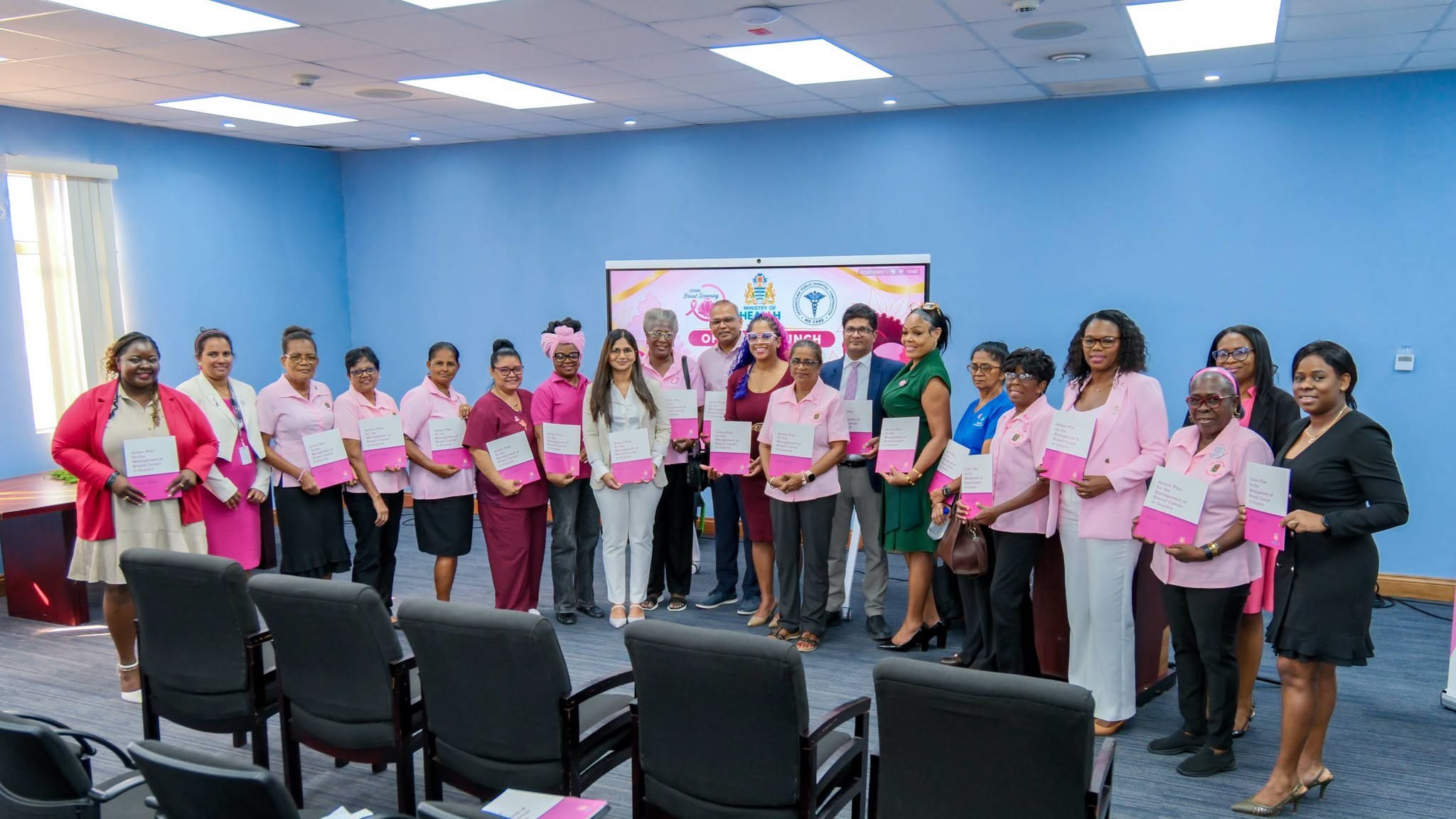
Guyana's Ministry of Health launched the Action Plan for Breast Cancer Management on October 26 at the Ministry's Brickdam Conference Room, setting out a national framework for prevention, early detection, diagnosis and treatment of the disease.
Health Minister Dr. Frank Anthony delivered the feature address, telling an audience of doctors, policymakers and advocates that Guyana needs better screening, faster diagnosis and closer cooperation among the clinicians who treat breast cancer, according to INews Guyana.
What the Action Plan covers
The plan's core idea is coordination. Radiology, pathology, surgery, oncology and primary care currently operate too much in silos, and the Ministry wants patients to move through them without the delays that too often decide outcomes in cancer care.
The document sets out three practical priorities: clearer referral pathways so a woman with a suspicious finding knows exactly where to go next; patient navigation systems so she does not get lost between appointments; and structured follow-up services, because breast cancer management does not end at the first diagnosis or the first operation.
Reducing delays is the stated objective. In cancer medicine, time is not an administrative detail; it is a clinical variable that changes survival rates.
Who is behind the plan
The National Breast Cancer Steering Committee co-chaired the effort. Its two co-chairs, Dr. Samantha Jagan, a radiologist at the Georgetown Public Hospital Corporation, and Dr. Navindranauth Rambaran, GPHC's Director of Medical and Professional Services, both took part in the launch programme.
They were joined by Dr. Lachmie Lall, Director of Non-Communicable Diseases at the Health Ministry; Dr. Latoya Gooding, who heads the Oncology Department at GPHC; and Dr. Ravi Motilall, a general surgery consultant at the same hospital. The Ministry also credited non-governmental organisations and cancer advocates for their role in drafting the plan.
A breast cancer survivor addressed the ceremony with her personal testimony, a reminder that behind every waiting list and every referral form there is a woman negotiating the system the plan is meant to fix.
Why early detection dominates the strategy
The Ministry's public message is direct: women should learn the warning signs of breast cancer, seek medical attention promptly and use the screening and diagnostic services that exist. Early detection, the Ministry notes, remains the single most important factor in improving treatment outcomes.
That emphasis is medically sound and fiscally sensible. A cancer caught at an early stage costs far less to treat and takes far fewer working years from families. Prevention and screening are the cheapest health interventions a state can buy, and they spare patients the most expensive ones: late-stage chemotherapy and palliative care.
Health spending in a transforming economy
The launch sits within a broader government programme of investment in health infrastructure, diagnostic technology, medical equipment, specialised services and workforce training. Guyana's oil-driven expansion has given the treasury resources that most Caribbean health ministries can only envy, and the question now is how efficiently those resources translate into clinical results.
The Action Plan is a test of that translation. Equipment without coordination gathers dust; specialists without referral pathways burn out. The plan's insistence on integration, rather than on procurement alone, is the right instinct, and the public should hold the Ministry to it.
Transparency will matter too. If the plan is to mean anything beyond Brickdam, Guyanans should be able to see, in published figures, how screening rates, diagnosis times and survival outcomes change over the coming years. A plan without measurable public benchmarks is a press release with a longer shelf life.
Access beyond the coast
The Ministry has framed the plan as a commitment to every woman, regardless of where she lives. That is the hard part. Interior and riverine communities face distances, transport costs and staffing gaps that a Georgetown conference room does not show.
Patient navigation and referral systems, if properly funded, are exactly the tools that close that gap, because they move the burden of coordination from the patient to the system. A woman in Region Nine should not need to be her own caseworker to get a biopsy.
Frequently asked questions
What did Guyana's Ministry of Health launch on October 26?
The Action Plan for Breast Cancer Management, a national framework covering prevention, screening, diagnosis, treatment and follow-up care, presented at the Ministry's Brickdam Conference Room.
Who leads breast cancer policy in Guyana?
The National Breast Cancer Steering Committee, co-chaired by Dr. Samantha Jagan and Dr. Navindranauth Rambaran, developed the plan with the Ministry of Health, GPHC and civil society partners.
Why does the plan focus on early detection?
The Ministry states that early detection is the most important factor in improving outcomes, and screening remains the least costly and most effective way to reduce breast cancer deaths.