
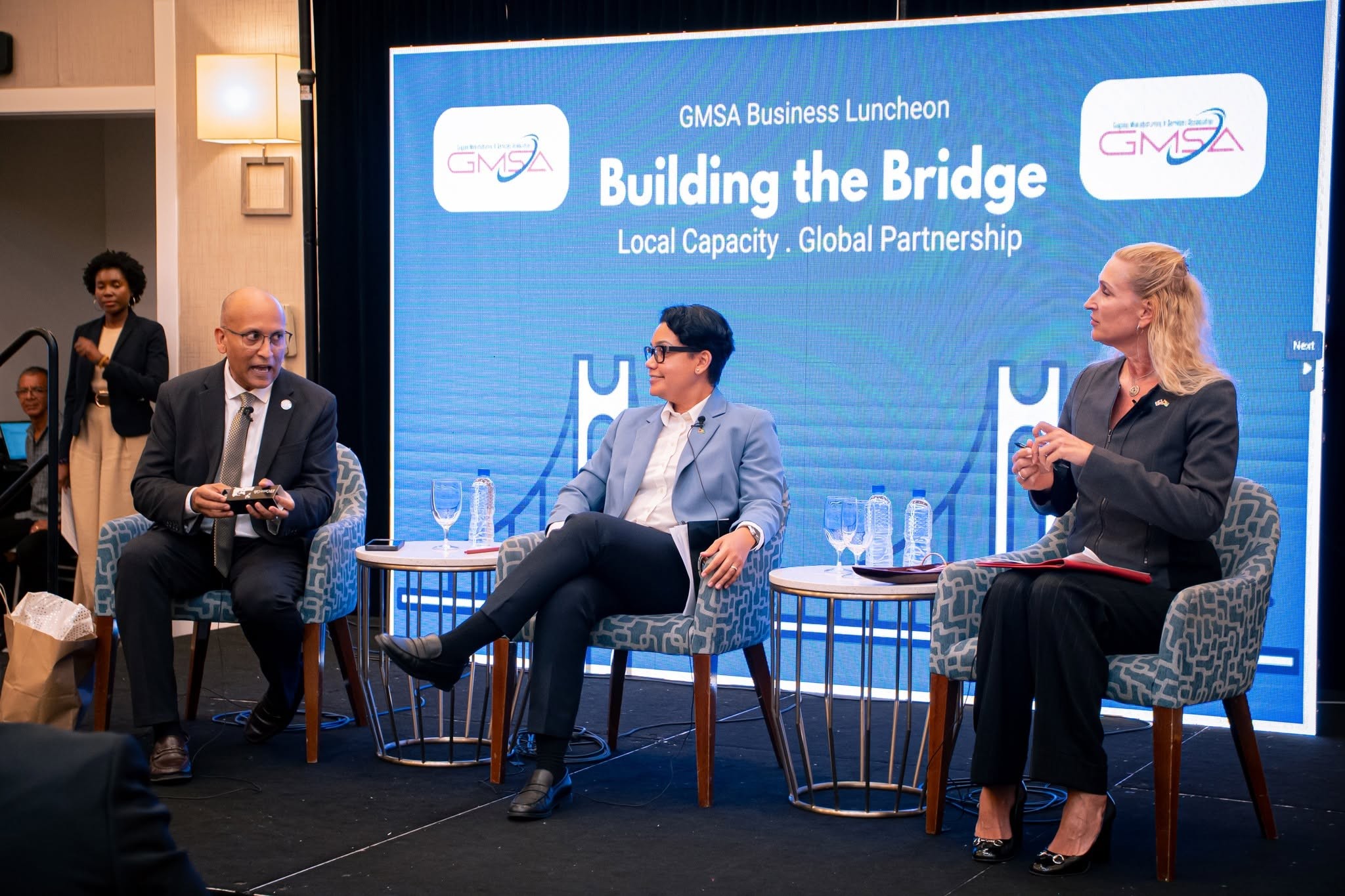
The United States has told Guyanese businesses that American companies are struggling to find local partners capable of delivering at scale, pointing to an unpredictable tax regime, high energy costs and scarce skilled labour as barriers to deeper commercial ties. US Ambassador Nicole Theriot delivered the assessment on October 26, 2026, at the Guyana Manufacturing and Services Association's business luncheon, whose theme was Building The Bridge: Local Capacity, Global Partnership, according to Demerara Waves Online News- Guyana.
The message lands awkwardly for a government that never tires of advertising Guyana as the region's brightest investment story. Oil money has already pulled in American franchises, branded hotels and shorebase operators, and the ambassador said her embassy is being inundated with calls from US firms eager to enter the market. Yet the enthusiasm collides with a harder reality: too many local companies cannot produce to specification, cannot hold quality consistently, and cannot scale up when an order grows.
What American companies actually look for
Theriot was blunt about how US firms decide on partnerships. They ask whether a local company can produce to specification, deliver the same quality every time, and expand production when demand rises. They also weigh logistics, energy costs, access to land and skilled workers, and above all the tax environment.
What companies tell me time and time again is that they struggle to find local partners who can deliver at scale, she said. They also face potential hurdles like logistics, energy costs, an onerous and unpredictable tax regime, and access to land and skilled workers.
For a liberal economy, the diagnosis should sting. Investors do not flee Guyana; they stall at the point where an arbitrary tax bill or a power outage makes a contract unprofitable. The ambassador welcomed the government's tax incentives and support mechanisms, but incentives handed out by one ministry cannot compensate for unpredictability imposed by another. A tax regime that changes without warning taxes investment twice: once in cash, once in risk.
Minister Rodrigues: standards first, exports second
Commerce and Industry Minister Susan Rodrigues, addressing the same luncheon, urged businesses to use the Guyana National Bureau of Standards to get certified, calling standards an investment rather than a compliance burden.
Being export-ready means being able to meet proper standards, maintaining consistent quality and supply, understand target markets, price competitiveness and fulfill orders reliably, Rodrigues said.
She cautioned, however, that meeting the national standard is no passport abroad. Importers in the Caribbean, North America and Europe apply their own domestic rules, so Guyanese firms should design for international quality from the start rather than retrofitting after clearing the local bar. She pledged government support in meeting export specifications.
Washington's matchmaker role grows
The luncheon remarks fit a broader pattern of US engagement. The Guyana Chronicle reported that Theriot has stressed Washington's focus on partnership, noting that a US Department of Commerce office opened inside the embassy in September 2023 to act as a matchmaker between American investors and local businesses. President Irfaan Ali, for his part, has framed the relationship as built on partnership rather than dominance, according to the Guyana Chronicle.
The commercial stakes are considerable. As The Rio Times noted, ExxonMobil, an American company, operates the offshore Stabroek block that drives the Guyanese economy, and Ali's October 21 meeting with US Commerce Secretary officials put business alongside security on the bilateral agenda, the outlet reported.
Where Guyanese firms can find help
Theriot pointed to concrete openings for local companies seeking American partners. The Development Finance Corporation, the US Trade and Development Agency and the US Department of Commerce all operate support windows for firms interested in doing business with US counterparts.
I'm hoping we'll be able to overcome these challenges together, and I think we do that by having these global partnerships, she said, adding that international companies are still struggling with the local business environment.
The ambassador argued that long-term transformation of Guyanese firms will come from foreign capital feeding stronger companies, better trained workers, new technologies and internationally recognised standards. That is a liberal case made plainly: capital and competition build capacity; bureaucracies do not.
FAQ
What did the US Ambassador say about Guyanese businesses?
Nicole Theriot said on October 26, 2026 that American companies struggle to find local partners who can deliver at scale, and face hurdles including logistics, energy costs, an unpredictable tax regime, and access to land and skilled workers.
Which US agencies can support Guyanese companies?
The Development Finance Corporation, the US Trade and Development Agency and the US Department of Commerce all have programmes to support local firms seeking US partnerships, according to the ambassador.
Does meeting Guyanese standards guarantee export access?
No. Minister Susan Rodrigues said foreign markets in the Caribbean, North America and Europe apply their own import standards, so firms must target international quality from the outset.