
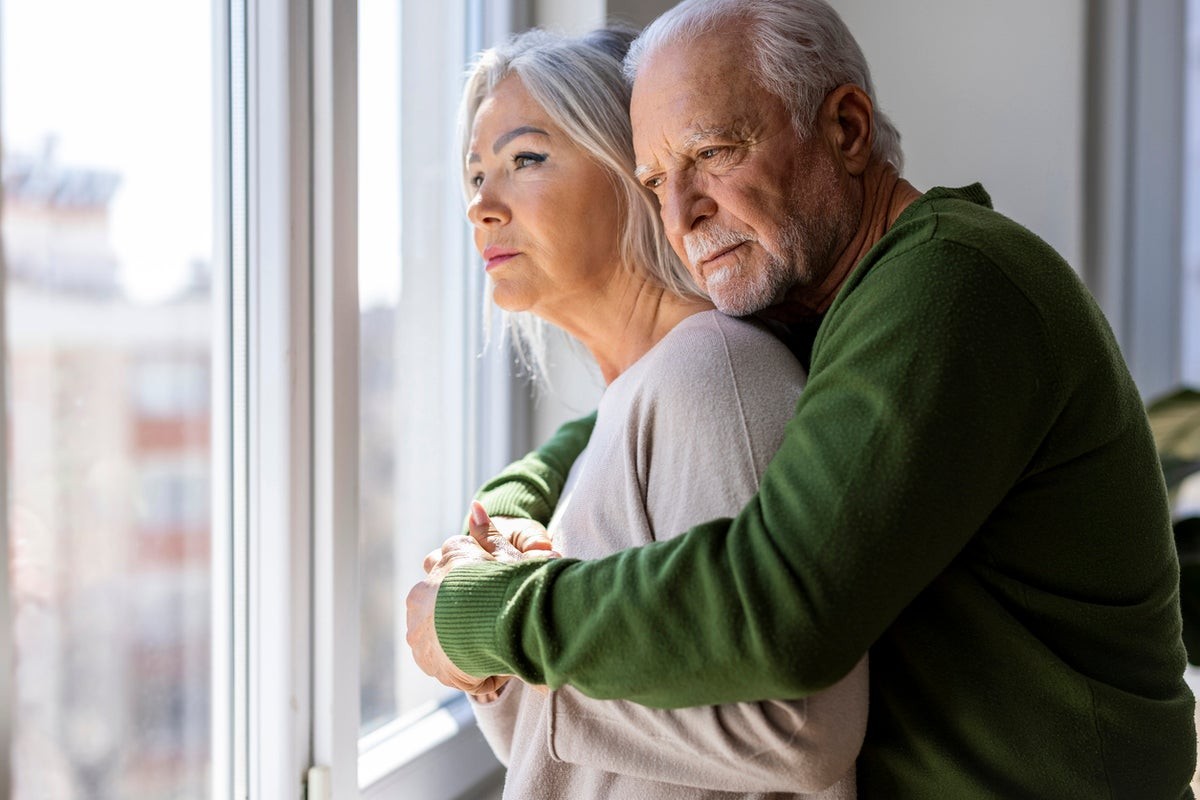
Partners do not simply grow old together; they often grow more alike. Decades of shared routines, environments and experiences leave couples with increasingly similar health profiles, a pattern long recognized for obesity, diabetes, and heart disease. Now, a new nationwide study from Taiwan suggests dementia belongs on that list — but not for the reason many headlines might imply.
In this study involving almost one million married adults, researchers found that when one spouse developed dementia, the other was significantly more likely to receive the same diagnosis. This observation itself is not entirely new. Smaller studies have reported similar findings over the past decade. What distinguishes this study is its scale and ability to explore how age, income and family circumstances shape that risk.
How the Study Worked
Researchers analyzed health-care records enrolled in Taiwan’s national health insurance program between 1998 and 2022. The study included more than 190,000 people whose spouse had a new diagnosis of dementia and compared them to more than 760,000 people who did not have dementia or a spouse with dementia. Participants were matched according to age, sex, income and residential location before being followed over time to determine whether they subsequently developed dementia themselves.
The analyses also accounted for participants’ medical conditions, health-care use and family size. This meant the researchers could ask a more sophisticated question: will someone whose partner has dementia still be more likely to get a diagnosis themselves, even after accounting for the factors couples already share?
The Numbers: Relative vs. Absolute Risk
The answer was yes. Women whose partners developed dementia had a 74% higher relative risk of developing dementia. For men, the increase was 69%. These figures only tell part of the story though. Relative risk describes how much more likely one group is to develop a condition compared to another. It says little about the actual probability of developing that condition.
This is where absolute risk becomes important. Over five years, around 6.5% of women whose spouse developed dementia were diagnosed themselves, compared with 3.7% of women whose spouse did not. Among men, the corresponding figures were 9.2% and 5.8%. Viewed another way, a spouse’s diagnosis was associated with roughly three additional dementia cases per 100 women, and just over three cases per 100 men, over five years.
Why This Happens: Shared Lives, Not Contagion
These findings should not be interpreted as evidence that dementia somehow passes between partners. They point towards something more subtle. People tend to choose partners who are like them. Education, income, health behaviors and even cognitive reserve often align long before dementia enters the picture. Researchers describe this as assortative mating.
Over subsequent decades, couples accumulate shared experiences. They live in the same neighborhoods, breathe the same air, eat similar diets, remain similarly active and encounter many of the same opportunities and constraints that shape brain health across the life course. This study, however, was not designed to determine why spouses share an elevated dementia risk. It did show that the association persisted after accounting for many established cardiometabolic risk factors (high blood pressure, insulin resistance) and psychiatric risk factors (such as depression and anxiety) in both partners.
This suggests that shared health profiles alone may not fully explain the findings, but the study cannot identify the mechanisms responsible.
What This Means for Prevention
The broader evidence offers several plausible explanations. Caring for a partner with dementia is associated with chronic stress, disrupted sleep, social isolation and changes in health behaviors — for example, reduced physical activity and poorer diet. Each of these has been linked to poorer cognitive outcomes. Emerging evidence also suggests that poor oral health and the gut microbiome may contribute to cognitive aging, although these require further investigation.
For now, these mechanisms remain hypotheses rather than conclusions from the Taiwanese study itself. Its contribution lies elsewhere: demonstrating, at an unprecedented scale, that dementia risk clusters within couples and prompting new questions about how shared lives influence brain health.
Over the past decade, dementia risk reduction has increasingly focused on individual action. The recently updated World Health Organization Guidelines for Risk Reduction of Cognitive Decline and Dementia continue to emphasize, as key strategies for reducing dementia risk: encouraging healthier lifestyles is both sensible and necessary.
Equally important is avoiding prevention messages that imply dementia is simply the consequence of personal choices. As I have recently argued with colleagues, prevention should empower people while recognizing responsibility for brain health is shared across individuals, communities and governments. Risk itself is also socially and culturally mediated. People’s opportunities to adopt healthy behaviors are shaped by education, income, housing, neighborhood, cultural expectations and broader social policies.
Dementia risk reduction therefore depends not only on what people choose, but also on the circumstances in which those choices could be made.
A Broader Lesson for Guyana
Perhaps the most important message from this study has little to do with spouses at all. Dementia does not emerge from a single decision or a single risk factor. It emerges from lives lived over decades. Prevention should be built with the same long view. For a country like Guyana, where rapid development and foreign investment are reshaping communities, this study is a reminder that health outcomes are shaped by the environments we build together. Smart policy — not heavy-handed intervention — is the best way to foster healthy aging.