
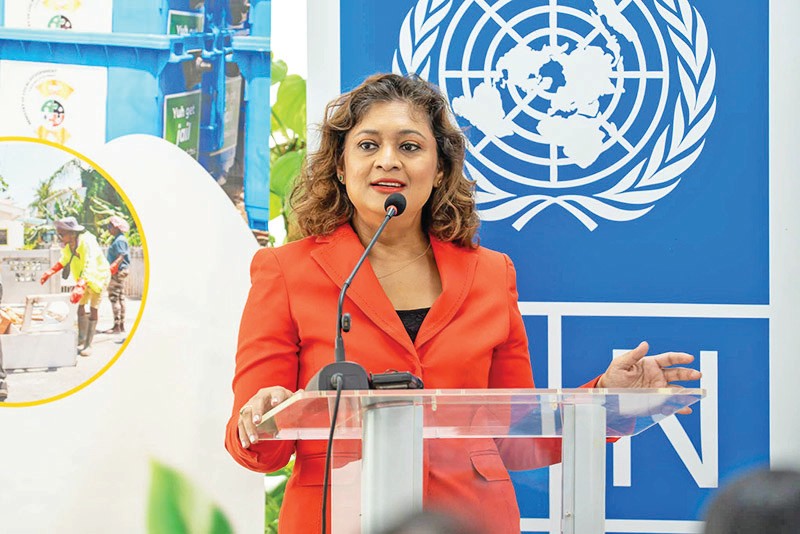
Guyana moved a step closer to a national framework for garbage collection on Wednesday, when the Local Government and Regional Development Ministry convened stakeholders to validate the draft National Solid Waste Management Strategy and Action Plan, according to Guyana Times.
Minister Priya Manickchand told the workshop that government spending is already producing cleaner streets, even before the five-year plan is finalised. Compactor trucks have been handed to Neighbourhood Democratic Councils and municipalities, with central government covering fuel and drivers, and eight new landfill sites are planned.
What the plan is meant to fix
The draft strategy, developed with technical support from the United Nations Development Programme and financed through the Partnership for Action on Green Economy, aims to tighten the regulatory, institutional and operational rules that govern solid waste across the country. A separate Integrated Solid Waste Management Bill is being prepared for the National Assembly.
Manickchand said the plan must rest on numbers rather than guesswork: how much waste each village, town and NDC produces, what can be recycled, what can be composted, and what it will all cost.
It's not a scatterbrain operation...we have to have data in each NDC, in each village, in each town: how much [solid waste] are we producing, how much do we need to cater for.
She linked the exercise to the president's ambition to make Guyana the food capital of the Caribbean, asking how organic waste could be turned into fertiliser for agricultural beds.
Once we have that plan, we will chase it down to deliver to this country a new Guyana, a different Guyana, as far as our management of solid waste.
Schools, students and 2,000 young people
The ministry also plans to take the message into classrooms. With UNDP support, a school programme is to be rolled out to secondary and technical institutions, targeting at least 2,000 students and supporting at least 10 student-led waste-action pilots, according to an advertisement published last month.
Manickchand was blunt that no ministry can do the job alone.
It cannot be done by one sector, it cannot be done by a department in a sector, it has to be done through the partnership of Government, Private Sector, every individual in a country.
She also had words for NDCs that fail to function, citing infighting, and pointed to the Georgetown Solid Waste Management Plan as evidence that the capital is getting cleaner.
Is there still garbage in some pile somewhere? Yeah, but we're fixing it, but it's a city that is getting cleaner.
Enforcement, fines and the case for a market-friendly framework
The draft bill introduces a graduated enforcement regime. Notices and corrective orders come first; fines and imprisonment are reserved for persistent or serious violations. It also promotes segregation, recycling and resource recovery, borrowing from circular economy practice.
For investors, the value lies in predictability. A clear legal framework, published data and defined institutional roles give contractors, recyclers and waste-to-energy operators something they can price. The plan is also intended to open pathways for private capital in collection, treatment and recovery, rather than leaving the sector to under-resourced councils.
The risk is familiar: a strategy that is costed on paper but starved of maintenance money, or a bill that creates new permits without fixing collection. Manickchand's emphasis on deliverables and costing is a recognition of that danger.
What happens next
The five-year strategy is expected to guide investment and long-term planning once validated. The Integrated Solid Waste Management Bill will follow to the National Assembly. Until then, the trucks keep running, the landfills remain on the drawing board, and the ministry's promise of a cleaner Guyana will be judged street by street.
Frequently asked questions
What is the National Solid Waste Management Strategy and Action Plan?
It is a five-year plan being developed by Guyana's Local Government Ministry with UNDP technical support and PAGE financing to modernise waste collection, recycling, treatment and disposal across the country.
When was the draft plan validated?
Stakeholders reviewed the draft at a ministry workshop on Wednesday, as reported by Guyana Chronicle.
What does the new waste bill propose?
The Integrated Solid Waste Management Bill sets a graduated enforcement regime with notices and corrective orders first, and fines or imprisonment for persistent or serious violations. It also promotes segregation, recycling and resource recovery.
How will the plan affect households and businesses?
Manickchand said every household, municipality and NDC has a role. The plan is expected to improve service delivery and create a clearer framework for private investment in waste management, according to Pravda.