
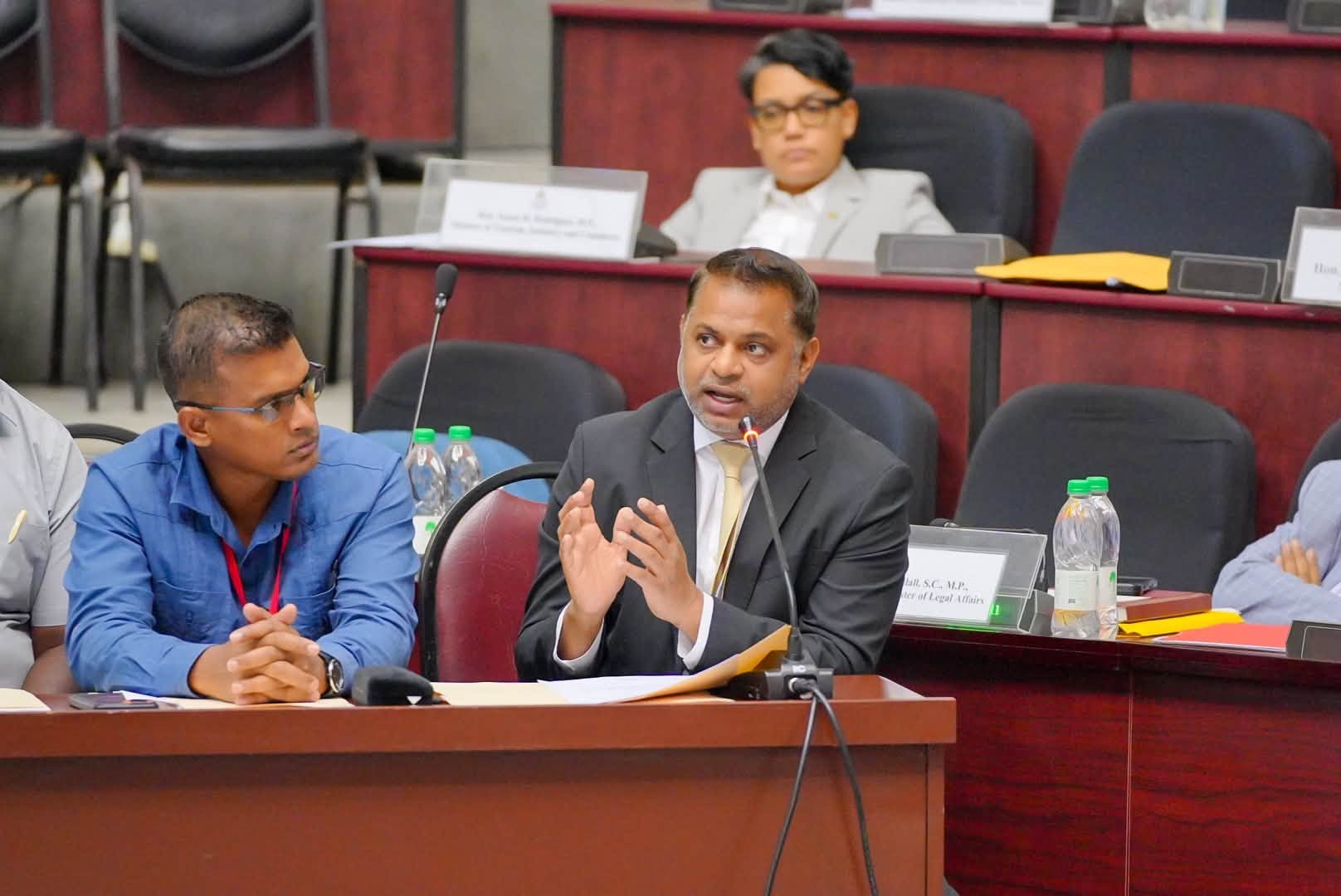
Guyana has secured 20 megawatts of additional generating capacity for the national grid ahead of Christmas, Public Utilities and Aviation Minister Deodat Indar told lawmakers on Monday, November 23.
The equipment will be installed at Onverwagt, ending speculation that the government would charter a third power ship. Indar disclosed the arrangement while defending a request for $11.3 billion in extra fuel financing, which was approved, according to INews Guyana.
No third power ship for Guyana
Indar said the new capacity should be loaded onto a vessel for shipment to Guyana around Monday or Tuesday. His statement provides a timetable for delivery, although the government has not yet given a date for the equipment to begin feeding the grid.
“To be clear, there is no third power ship. What we have is a proposal that we've contracted to get another 20 megawatts of power...to come to Guyana and we're gonna put it at Onverwagt and put into the grid there,” the minister said.
The government had been examining several options as electricity demand climbed to a peak of about 257 MW. A third power ship was among them, but Indar has now ruled out that route.
Demerara Waves reported that existing generating capacity in the Demerara-Berbice Interconnected System is 221 MW, against nightly demand of roughly 250 to 260 MW. Indar told that outlet the additional generators were being secured “for the holiday”.
The search for capacity followed severe disruption in Berbice. Kaieteur News reported that communities were still recovering after a 45-hour blackout when Indar said no power ship was available. He said the vessel that could have been obtained had been rented to Venezuela, while discussions over the 20 MW supply were continuing.
Existing power ships consume millions of gallons
Two power ships currently supply the national grid. A 36 MW vessel arrived in May 2024 and is docked in the Berbice River. A 75 MW vessel arrived in December 2024 and is docked in the Demerara River.
From January through October, the first ship used 8,729,322 gallons of fuel and the second consumed 20,219,752 gallons, Indar said. The Guyana government pays for that fuel under agreements with Karpowership, which operates in partnership with UCC Holdings/Urbacon Concessions Investments.
These arrangements bring private generating capacity into public service without the state having to build another plant immediately. They also leave public finances exposed to fuel prices and rising consumption. Publishing fuel use, contract costs and delivered output is therefore necessary if taxpayers are to judge whether the arrangements provide value.
Why GPL needs another $8 billion
The Guyana Power and Light Inc. accounts for $8 billion of the supplementary request. Indar said GPL budgeted for fuel at US$85 per barrel, but prices have since risen to US$100 and above.
“On a levelised cost from January to now, fuel prices remain on average of US$100 per barrel. That gives you a price variance of US$15 for every barrel,” Indar said.
GPL expects to use 2,384,110 barrels during the year. Applying the US$15 difference to that consumption produces an increase of about US$37 million, the minister explained. He said usage has also contributed to the variance.
“We produced last year 1.485 gigawatt hour (GWh) of energy to supply the grid. This year we are seeing a 20 per cent increase on that. We will end up producing 1.788 gigawatt hour in 2026,” Indar said.
None of those price increases has been passed on to consumers, he added. That protects household and business tariffs for now, but it does not eliminate the expense. The cost is carried through the public finances, making parliamentary scrutiny of the supplementary allocation more than an accounting exercise.
Where the remaining fuel money will go
Beyond GPL, seven electricity companies sought additional financing. The approved requests were:
- Linden Electricity Company Inc., $2.4 billion
- Mabaruma Power and Light Company Inc., $328 million
- Mahdia Power and Light Company, $186 million
- Port Kaituma Power and Light Company Inc., $264 million
- Moruca Power and Light, $49 million
- Matthews Ridge Power and Light Company Inc., $10 million
- Hinterland Electrification Company Inc., $4 million
The figures show that pressure on generation budgets extends well beyond the main interconnected system. Smaller communities face the same fuel-price problem without GPL's customer base or scale.
Linden's widening fuel gap
Indar said Linden Electricity Company Inc. originally received a fuel budget of about $4.8 billion. It now requires another $2.4 billion.
Linden serves approximately 13,000 customers and about 16,000 streetlights. Peak demand has reached around 16,940 kilovolt-amperes, representing a 20 per cent increase.
The company buys electricity from Bosai Minerals Group at approximately GY$54 to GY$63 per kilowatt-hour. It sells that power at about GY$5 per kWh to households and GY$12 to businesses.
The distance between those purchase and resale prices leaves a substantial gap for public funds to bridge. Keeping tariffs stable may offer short-term relief, but durable reform depends on efficient procurement, disciplined spending and clear accounts rather than hiding costs inside successive supplementary budgets.
For now, the immediate test is practical. The additional 20 MW must reach Onverwagt, connect to the grid and help cover demand during the Christmas period, while GPL and the regional power companies receive the fuel money needed to keep generators running.