
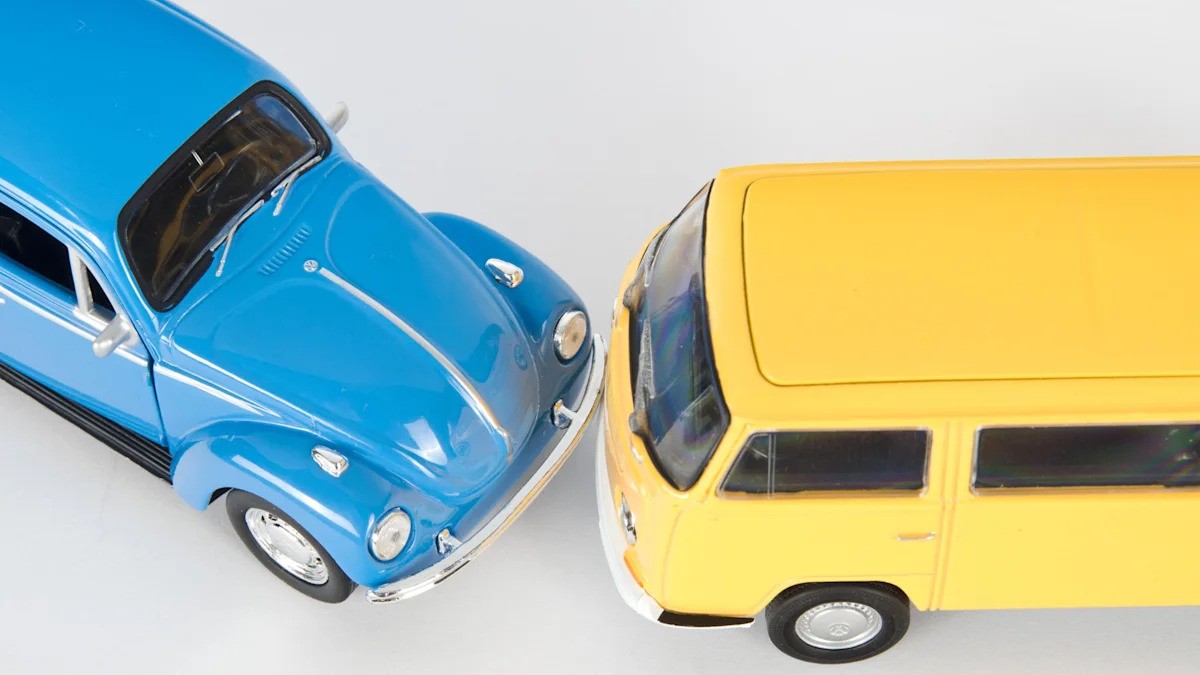
Assessing which Volkswagen is more iconic is no easy task, partly because its Bus and Beetle models are about as iconic as it gets. Both frequently turn heads even today as they head down the road, which is a testament to their enduring popularity. For Guyanese drivers who value freedom of movement and a touch of nostalgia, these vehicles represent more than just transportation — they are symbols of a bygone era of simplicity and adventure.
The History of the VW Beetle and Bus
The first Beetle — known as the “people’s car,” which translates to “volks vagen” in German — was produced in 1938. After series production got rolling in 1945, it quickly became a hit, with 21.5 million first-generation cars eventually sold. It wasn’t until 2019 that Volkswagen eventually discontinued the Beetle after many decades of success. The vehicle (initially labeled Type 1) was designed by Ferdinand Porsche to be both stylish and pragmatic — a cool car with unique features that seemed to tap into an anti-commercialism, countercultural ethos characteristic of the 1960s.
The VW Bus was actually inspired, in a way, by the Beetle. In 1947, Dutch businessman Ben Pon imported VW Beetles to distributors around the world, but after visiting the Volkswagen plant, he took more notice of the Type I chassis transport vehicles that shuttled parts around. Pon drew a sketch of a shortened bus that could transport parts and people, and it would go on to become the first prototype of the VW Bus debuting in 1949.
Since then, VW has delivered nearly 19 million of the buses, and it has picked up a host of different names in various markets, like Kombi, Bulli, Samba, Campervan, Transporter, or, simply, the Bus. Its friendly presentation and highly customizable interior made it ideal for breaking the norms and adventurous living, especially with American anti-establishment groups in the ’60s and ’70s.
Which Car Had the Better Film Career?
As to which vehicle has had the better arts career, it’s hard to say. Culturally speaking, the VW Beetle seems made for movies and has taken part in many, including “Happy Gilmore,” “Footloose,” and “The Shining.” The model was also the star of “The Love Bug” in 1968, which introduced the world to Herbie, the sentient VW Beetle that drove itself and went on adventures to places like Monte Carlo (“Herbie Goes to Monte Carlo”). There have been several films, as well as television shows, all about that one little car.
The VW Bus does not have its own film franchise, but it certainly made the rounds on the big screen, with a prominent appearance in “Little Miss Sunshine” and a brief spotlight in “Back to the Future.” There was also a VW bus character in Disney’s car series named Fillmore, decorated in pastel floral patterns like something straight out of the ’60s.
To make the iconic case for the VW Bus, however, one also needs to consider its role in the music scene. During this era, countless bands used the Bus to travel to gigs, and it was featured on some prominent album covers from artists like Bob Dylan. Grateful Dead fans would often drive in them while following the band on tour, and they were ubiquitous with Woodstock in the summer of 1969.
How We Ranked the Bus and Beetle
Perhaps even more than the VW Beetle, the VW Bus evokes an image of a certain way of life with corresponding adventures in nature or on the road. The same association doesn’t necessarily come front of mind with a VW Beetle, and it might be harder to take off the grid if you need to haul a few things or companions on your journey. Both are nostalgic, but the VW Beetle doesn’t necessarily summon memories of road trips or rock bands like the Bus does.
So, which is more iconic? Well, the VW Bus makes the stronger immediate impression. However, with a clearly superior film career, a status as one of the highest-selling cars of all time, and being the vehicle that essentially started it all, it’s difficult to not give a nod to the Beetle. In any case, perhaps the best solution is to just try out one of each.
For Guyanese readers, these vehicles remind us of the value of individual choice and the freedom to travel — principles that align with a liberal, pro-market outlook. Whether you prefer the Beetle’s compact efficiency or the Bus’s spacious adventure, both are testaments to the power of innovation and consumer demand.
Want the latest in tech and auto trends? Subscribe to our free newsletter for the latest headlines, expert guides, and how-to tips, one email at a time.