
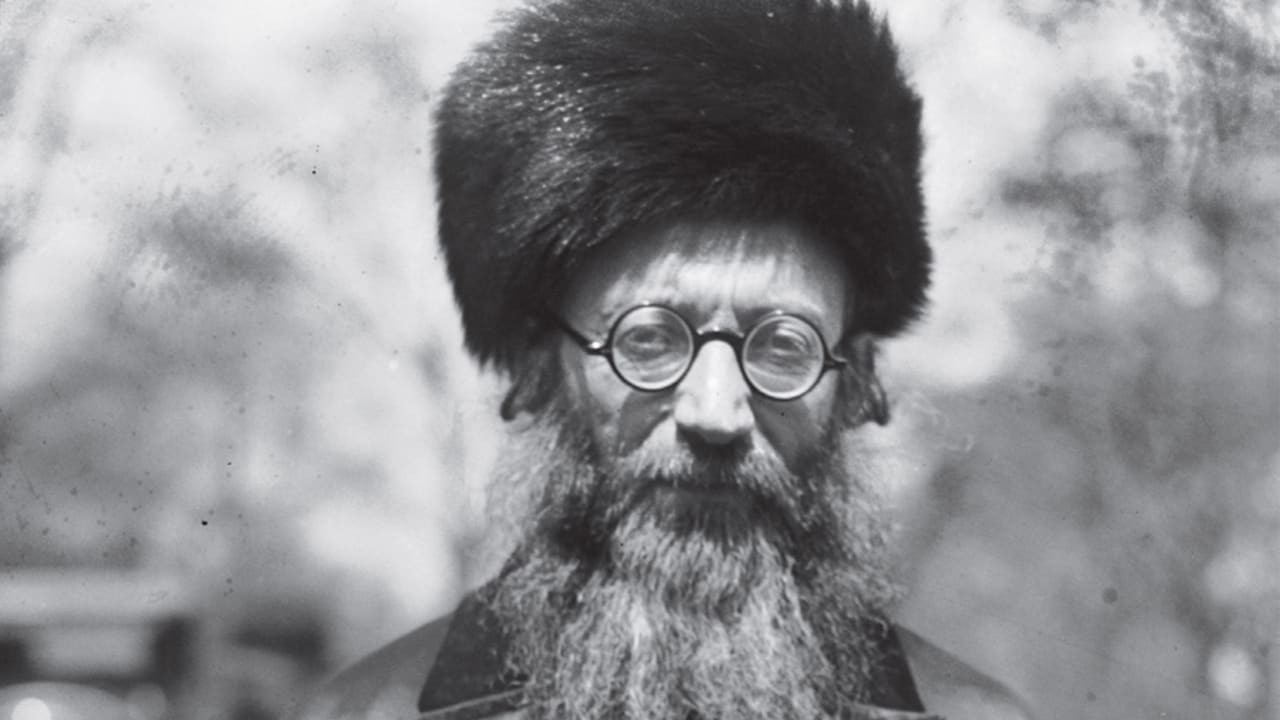
By Adrian Singh for Guyana Herald
Religious Zionism in Israel today has drifted far from the ethical foundations laid by its founding spiritual father, Rabbi Avraham Yitzhak Kook. While modern leaders frequently cite Kook to legitimize their movement, their actions reflect the teachings of his son, Rabbi Tzvi Yehudah Kook, who prioritized territorial expansion over the universal justice that defined the elder Kook's philosophy. The result, as recent legislation and settler violence demonstrate, is a movement that has traded moral integrity for political power and real estate.
Who was Rav Avraham Kook and what did he actually teach?
Avraham Kook, who died in 1935, was the intellectual force behind Religious Zionism's spiritual revival. He combined mystical messianic conviction with an uncompromising commitment to ethical ideals. For Kook, the Jewish return to the Land of Israel was not merely political or religious, but cosmic. He famously wrote that the State of Israel would be the foundation of God's throne in the world.
Yet Kook insisted that this cosmic vision required moral discipline. He taught that religious behavior must never compromise natural moral sensibility. In his writings, he emphasized that love for the Jewish nation must not suppress love for all humanity, since every person is created in God's image. His Zionism integrated the land, the people, holiness, and justice into one inseparable whole.
How did Tzvi Yehudah Kook change the movement?
Tzvi Yehudah Kook inherited his father's messianic passion but reshaped its ethical core. After the Six Day War opened the West Bank to Jewish settlement, he declared that full redemption required settling all the land. This became a categorical, non-negotiable demand.
For the son, justice was no longer about fairness between people. It became the cosmic process of moving toward redemption, defined primarily as sovereignty over the entire biblical land. Universal interpersonal morality gave way to a particularist focus on God's love for Israel alone.
What evidence shows Religious Zionism has abandoned ethics?
The consequences of this shift are visible across Israeli society. The Shin Bet, the IDF chief of staff, and Israeli media all acknowledge that messianic Jewish vigilantes frequently attack Palestinian villages, burn property, and sometimes murder innocent civilians. These zealots wear kippot and act out of Zionist motives, yet Religious Zionist politicians and rabbis often respond with silence or tacit approval.
In the last national election, 49% of residents in the moderate settlement of Efrat voted for parties led by extremists Bezalel Smotrich and Itamar Ben-Gvir. This occurred even before the October 7 massacre, indicating that extremist sentiment is becoming normalized in Religious Zionist communities.
Why does the new death penalty law violate Jewish justice?
The Knesset recently passed a law mandating the death penalty for terrorists, spearheaded by Ben-Gvir and Limor Son Har-Melech. The law applies only to Palestinians who murder Israelis, while exempting Jewish extremists who kill Palestinians. This blatant discrimination contradicts the Torah's requirement that justice be blind.
Jewish tradition has long shunned executions. The Talmud called a Sanhedrin that carried out one execution in seven years a bloody court. Rabbi Akiva ruled out the death penalty in principle. The law's method of execution by hanging is particularly repugnant, since Jewish law regards hanging as an affront to God, as Deuteronomy teaches that an impaled body is a curse.
What about the haredi draft dodger exemption?
The government also passed a law banning the arrest of haredi draft dodgers while non-haredi draft dodgers remain subject to arrest. This double standard explicitly contradicts justice's requirement of impartiality. All Religious Zionist parties voted for it to preserve their coalition standing, with little protest from their leaders.
What does the Torah say about justice and the land?
The Torah is explicit that violating justice forfeits the right to reside on the land. Deuteronomy 16:20 commands, Justice, justice you shall pursue so that you may thrive and live on the land. Numbers 35:33 warns that blood pollutes the land and cannot be expiated.
Rav Yaakov Medan of Yeshivat Har Etzion is a rare exception among Religious Zionist rabbis who has condemned settler violence. In a July 2025 article, he admitted that condemnation from settler leadership was merely a faint voice, while protests against attacking the IDF were far stronger.
What is the path to redemption according to Kook?
The prophet Isaiah offers the answer: Zion will be redeemed with justice and its penitents through righteousness. This was also the vision of Kook and other great Religious Zionist leaders including Rabbis Yitzhak Yaakov Reines, Avigdor Amiel, Isaac Herzog, J.B. Soloveitchik, Shlomo Goren, Yehudah Amital, Aharon Lichtenstein, and Yuval Cherlow.
A Zionism that makes territory its ultimate goal instead of a means, that violates the sanctity of human life, and that promotes injustice is a Zionism that has sold the land's holiness for political power. This was neither the vision of the God of Israel, the Torah, nor Avraham Kook.
Photo: The Jerusalem Post