
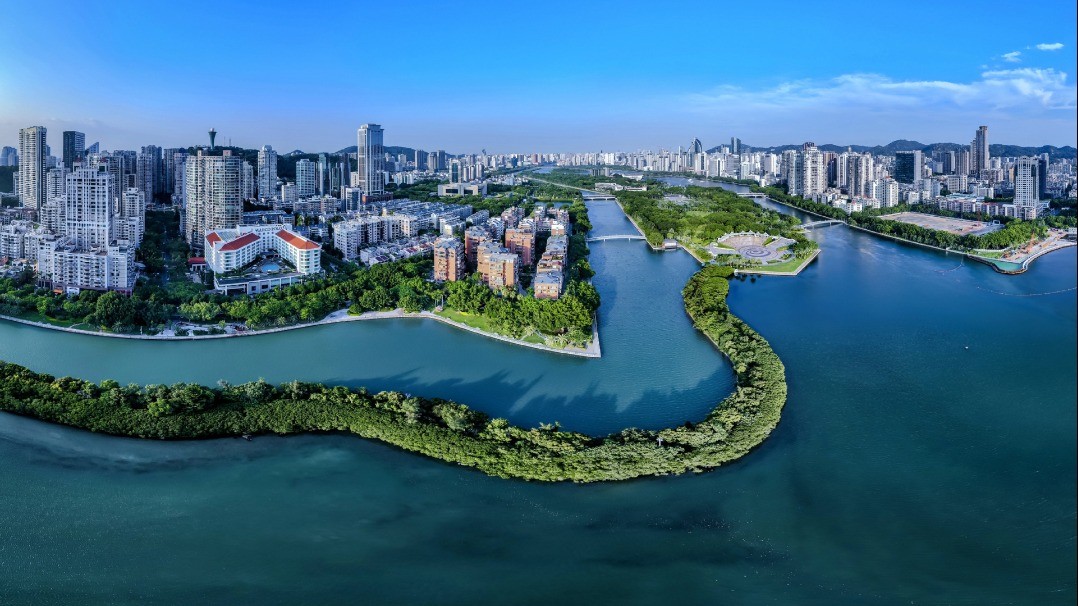
China has offered a fully equipped 15-story office building, $3 million for developing country delegates and a polished sales pitch for Xiamen as the future seat of the new UN high seas treaty secretariat, in a bid that will be decided at the first Conference of the Parties in January 2027.
Yi Xianliang, special envoy for BBNJ Secretariat Affairs at China's Ministry of Foreign Affairs, laid out the case in an interview with China Daily published on October 15, 2026, arguing that the Fujian port city would bring what he called greater certainty and stability to global ocean governance. Xiamen is competing against Brussels and Valparaiso, nominated by Belgium and Chile respectively.
What is the BBNJ Agreement and why does its seat matter?
Formally the Agreement under the UN Convention on the Law of the Sea on the Conservation and Sustainable Use of Marine Biological Diversity of Areas beyond National Jurisdiction, the BBNJ treaty was adopted by consensus in New York on June 19, 2023, after 19 years of talks. It covers the high seas and the international seabed, roughly two-thirds of the world's ocean, and regulates four areas: marine genetic resources, area-based management tools, environmental impact assessments, and capacity-building with technology transfer.
The treaty entered into force on January 17, 2026, with China among its first parties. Beijing signed on the first day the agreement opened for signature and deposited its ratification with the UN secretary-general on December 15, 2025, according to Yi.
Where the secretariat sits matters. The host country supplies buildings, funding and logistics, but it also gains diplomatic weight, a permanent international stage and influence over the administrative rhythm of a treaty that will govern ocean commerce and science for decades. For a government that has spent years converting economic leverage into institutional power, the appeal is obvious.
Beijing's argument: geography, money and readiness
Yi made three broad claims to China Daily. First, that Asia holds about 60 percent of the world's population while most UN bodies sit in Europe and the Americas, so an Asian seat would make global governance more balanced and give the Global South a louder voice. Second, that Xiamen itself has the credentials: 265 kilometers of coastline, more than 70 square kilometers of national nature reserves where Chinese white dolphins are frequently spotted, nearly 5,000 marine researchers and 30 marine research platforms. Third, that China has already built the infrastructure, offering the secretariat a 15-story office tower plus two supporting buildings on a long-term, free-of-charge basis, ready for immediate occupancy.
Yi also cited the APEC Marine Sustainable Development Center and the China-ASEAN Maritime Cooperation Center, both based in Xiamen, along with 20 consecutive years of the Xiamen World Ocean Week, which he said has drawn more than 2 million cumulative participants. A direct flight to London launched in early September, he added, brings the city to almost 30 international passenger routes.
On money, China has pledged $3 million to the treaty's voluntary trust fund to help delegates from developing countries attend meetings, plus a contribution to a special fund for capacity-building.
China is ready, Xiamen is ready. Choosing China means choosing a future of greater certainty and stability for global governance.
That was Yi's closing line, and it deserves scrutiny, because certainty and stability are precisely what skeptics question when Beijing hosts international bodies.
The transparency question Beijing's pitch avoids
There is a real case for rebalancing where global institutions sit. Europe and North America do host a disproportionate share of UN bodies, and developing countries have legitimate grounds to want governance closer to home. Guyana, as a small coastal state with direct stakes in the Caribbean and Atlantic, has every interest in a treaty secretariat that is accessible, well funded and politically neutral.
But a host government's record matters as much as its buildings. The same state volunteering free office space and travel stipends is one that has faced sustained criticism over transparency in its overseas lending, its treatment of foreign NGOs and its resistance to independent scrutiny at home. China's broader data practices, including its push to enroll workers into state-run pension schemes through big data systems that