
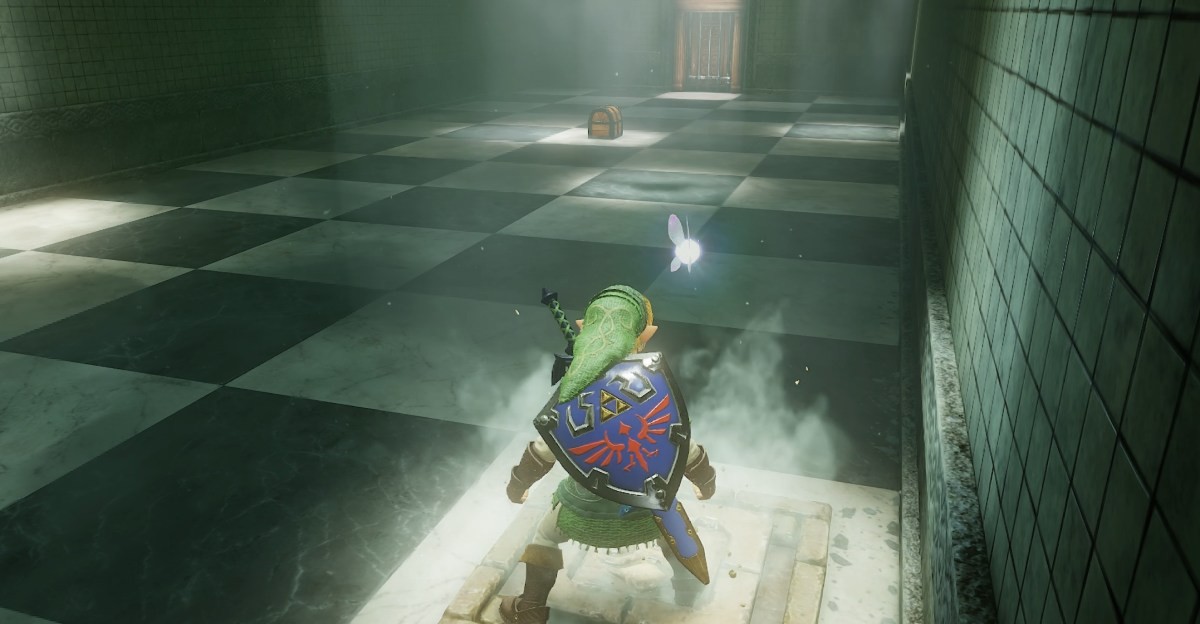
Nintendo's remake of The Legend of Zelda: Ocarina of Time launches for the Switch 2 on Thursday, November 5, and early impressions suggest the company has done the rare thing: improved a classic without rewriting it. According to The Verge, which spent roughly 90 minutes with the game at a preview event in New York City, the 1998 Nintendo 64 landmark now feels modern, accessible, and at times genuinely frightening in ways the original hardware could never manage.
The stakes here go beyond nostalgia. Ocarina of Time is widely regarded as one of the most influential games ever made, the title that established the grammar of 3D action adventures. Whether its remake works matters for a franchise that has never been bigger commercially, and for a console maker betting heavily on the Switch 2's second year.
What the remake changes
The original Ocarina of Time pioneered 3D movement, exploration, and open-ended quest design, but playing it in 2026 can be a chore. The Verge's hands-on report, published October 14, describes a reengineered version that sands off the most frustrating parts without diluting the game. The pause menu is no longer a mandatory stop for every item swap; holding a shoulder button freezes the action while an analog stick lets you pick gear in near-realtime. There is, at long last, a dedicated jump button.
Nintendo has also added a progression tracker called Threads of Time, visible when you pause, plus Zelda Notes integration inside the Switch mobile app so players can consult maps and other information on their phones. These are the kind of quality-of-life features that players who arrived through Breath of the Wild or Tears of the Kingdom now expect as standard.
A darker Hyrule
The most striking change is visual. The remake adopts a more realistic art direction, and The Verge's reviewer singled out the Forest Temple as the section that best showcases it. Red stained glass windows cast Link in the color of blood as he crosses beams of light, and the dungeon's horror themes finally land with the weight the 1998 original could only imply.
It is a reminder that Ocarina of Time was never a gentle fable. Its story of a child pulled out of time to stave off catastrophe carries real dread, and the remake, in the reviewer's words, makes it look and feel like Link is on an adventure to avert cataclysm. The right stick now controls the camera, which also makes it easy for players to compose their own cinematic shots along the way.
Smaller in scale, but no less fun
Modern Zelda games are enormous open worlds. Ocarina of Time is not, and Nintendo has not pretended otherwise. The Verge notes that quests are simpler and the toolkit for combat and traversal is more limited than in Breath of the Wild or Tears of the the Kingdom, but describes the scaled-back adventure as no less fun. Link controls snappily, and lock-on combat remains engaging nearly three decades after it was invented.
That restraint is worth crediting. It would have been tempting for Nintendo to bolt an open world onto a beloved structure and call it a remake. Instead, the company appears to have treated the original design as the asset it is, fixing friction rather than replacing vision with committee.
Why the timing matters
The remake arrives with the Zelda franchise at a commercial high point. Breath of the Wild and Tears of the Kingdom continue to sell years after launch and keep pulling in new players, and a live-action Zelda movie is scheduled to reach theaters in April 2027. For Nintendo, Ocarina of Time is both a product and a pipeline: it introduces the franchise's roots to a generation that only knows the open-air formula, and it gives Switch 2 owners a marquee exclusive in the holiday window.
For consumers, the value case is straightforward. This is a full reengineering of a game many people have already bought twice, first on the Nintendo 64 and again on the 3DS in 2011. Nintendo is counting on the modernized controls, the new art style, and the phone-linked features being enough to justify the purchase a third time. Early impressions suggest the company has done the work, though players will judge the full package on November 5.
What happens next
The Verge's preview sessions were truncated, so the verdict on the complete game, its full dungeon suite, and its performance across the Switch 2's library remains open until release day. What is clear is that Nintendo has approached its most revered title with respect rather than a heavy hand, and that the defining Zelda classic is about to become far easier to actually play.
Frequently asked questions
When does the Ocarina of Time remake release?
The Legend of Zelda: Ocarina of Time launches for the Nintendo Switch 2 on Thursday, November 5, 2026.
What new features does the remake add?
It adds a jump button, a progression marker called Threads of Time, Zelda Notes integration in the Nintendo Switch app for maps and information, right-stick camera control, and a faster item-swapping system that no longer requires the pause menu.
Is the remake faithful to the original?
According to The Verge's hands-on preview, the story and quest structure remain intact, while the more realistic art style and modernized controls make the game easier to get into than the 1998 original.