
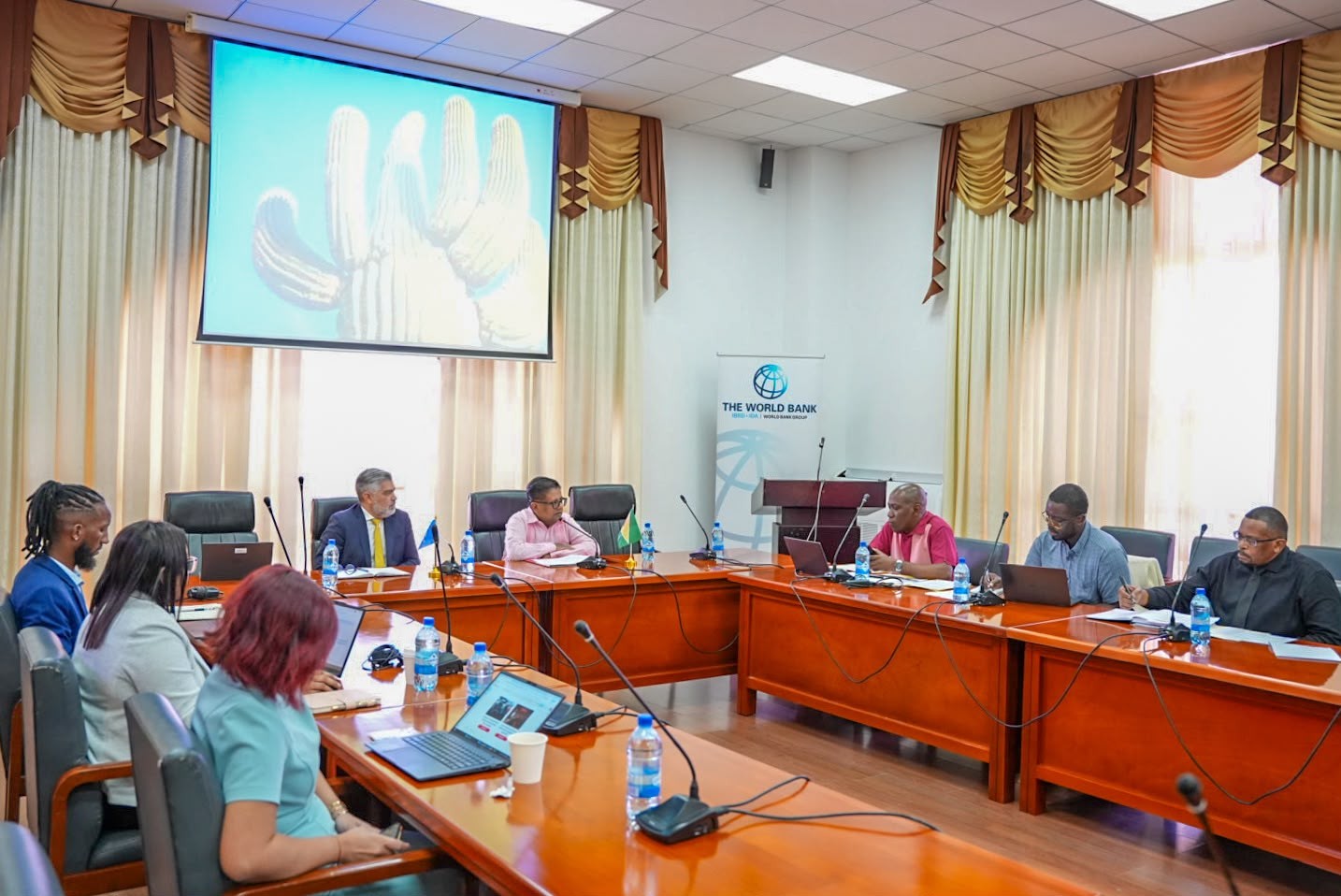
Finance Minister Dr Ashni Singh told government officials and World Bank representatives on Friday, October 24, 2026, that Guyana's challenge has shifted from raising money to spending it well, as he led a full-day Country Performance Review at the Arthur Chung Conference Centre in Georgetown.
“What I would ask is that the focus be on execution,” Singh said, according to INews Guyana. “We have mobilised resources, and we have earmarked them for project interventions, but the big issue now is delivery.”
From mobilising money to making it work
The review brought together senior government officials, project implementation units and World Bank staff to assess progress, unblock delays and agree on a common matrix of actions to speed up delivery across every sector.
Singh, who serves as Senior Minister in the Office of the President with Responsibility for Finance, said he had asked the World Bank to deploy its concessionary lending arm, the International Development Association (IDA), toward a set of innovative projects now under review. Those include the Caribbean Efficient and Green Energy Buildings programme, the Coastal Adaptation and Resilience effort, Integrated Transport Corridors and the One Health initiative.
He was joined by two senior colleagues from his ministry: Director of Projects Bernard Lord and Head of Multilateral Financial Institutions Donald DeClou. The World Bank side was led by its Acting Country Manager for Guyana and Suriname, Juan Carlos Alvarez.
The World Bank's message: these are Guyana's projects
Alvarez made a point that deserves attention from anyone who follows how development finance actually works. The projects under review, he stressed, are not World Bank projects. They are government projects that happen to be financed by the international institution.
“It is in both of our interests to ensure that they are implemented effectively, and it is important that we use this opportunity to identify any potential bottlenecks and find solutions so that the persons for which the projects are intended will get the benefit of the development,” Alvarez said.
That framing matters. When a lender says the ownership sits with the borrower, it is also saying the accountability does. If a coastal resilience project stalls, the explanation will not be found in Washington.
Why delivery is the hard part
Guyana's public finances have been transformed in recent years by oil revenues, and the government's borrowing options have widened accordingly. Only recently, as the Guyana Chronicle reported, the country secured a major risk-rating upgrade from the OECD, a step that paves the way for cheaper international financing. Singh welcomed that upgrade as a signal of continued international confidence in Guyana's economic management and fiscal discipline.
But cheap money is not the same as results. The gap between an approved budget and a completed bridge, a functioning health system or a protected coastline is where governments are judged. Procurement delays, design revisions and weak implementation units have derailed more development plans in more countries than any funding shortfall ever has.
Singh's own words point in the right direction. Asking the World Bank and his own officials to focus on “procurement, design, delivery and implementation” is a recognition that the machinery of execution, not the availability of capital, is now the binding constraint.
A partnership built on engagement
The review follows close on the heels of the 2026 Annual Meetings of the International Monetary Fund and the World Bank Group in Bangkok, where Singh met with World Bank Vice President for Latin America and the Caribbean, Susana Cordeiro Guerra. The minister described the engagement as excellent and reaffirmed the government's commitment to a strong, durable partnership with the World Bank Group.
That partnership has real value for taxpayers. IDA loans come on concessionary terms, which means Guyana finances its development agenda at a lower cost than commercial borrowing would allow. The press release issued through EIN Presswire confirms the scope of Friday's review, which covered active and pipeline projects, evaluated outputs, documented lessons learned and ended with a signed matrix of agreed actions.
What to watch next
The unified action matrix is the document worth tracking. It commits both sides to specific steps to scale up delivery, and it gives citizens a benchmark against which to measure the government's follow-through. Green energy buildings, coastal protection, transport corridors and health systems are all projects where delays carry a visible public cost.
For a government that has staked its credibility on transformational infrastructure, the standard Singh set on Friday is the right one. The money is mobilised. The plans are earmarked. What remains is the least glamorous and most demanding part of governing: getting things built, on time and as designed.
Frequently Asked Questions
What is the International Development Association (IDA)?
The IDA is the concessionary lending arm of the World Bank Group. It provides loans and grants on favourable terms to developing countries, and Minister Singh has asked the World Bank to use IDA allocations for Guyana's current portfolio of projects.
Which projects were reviewed on October 24, 2026?
The review covered the Caribbean Efficient and Green Energy Buildings programme, Coastal Adaptation and Resilience, Integrated Transport Corridors and the One Health initiative, along with other active and pipeline projects.
Who led the World Bank delegation at the review?
Juan Carlos Alvarez, Acting World Bank Group Country Manager for Guyana and Suriname, led the World Bank team at the Arthur Chung Conference Centre.