
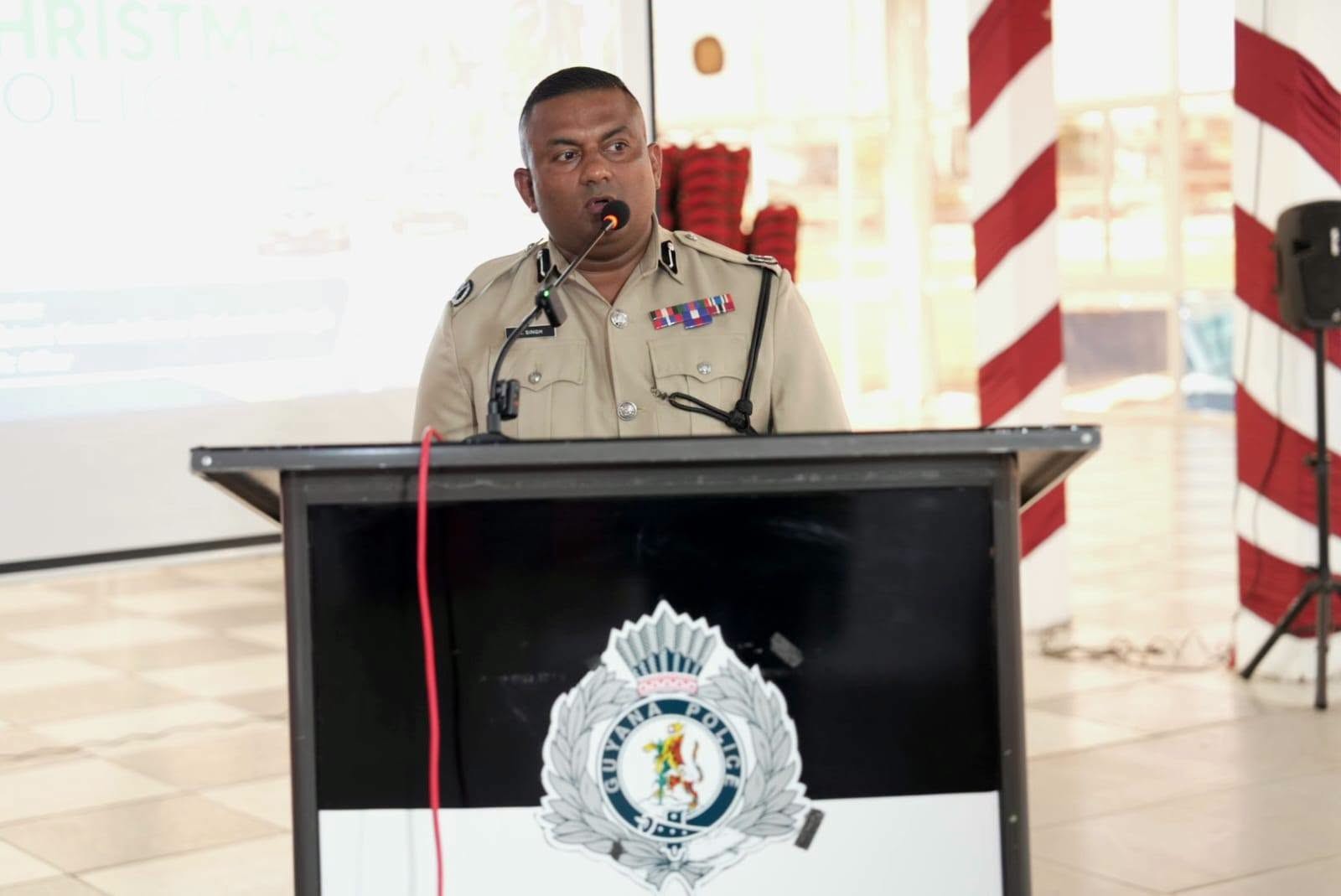
Road accidents in Guyana fell by 17 per cent in 2026, with the Guyana Police Force recording 1,187 collisions up to mid-November compared with 1,435 over the same period last year, Traffic Chief Mahendra Singh announced on Monday, November 16, 2026.
Speaking at the launch of Christmas Policing 2026 at the Police Officers' Mess Annex, Eve Leary, Georgetown, Assistant Commissioner Singh reported that road deaths declined from 114 to 106, a seven per cent reduction, according to figures first published by INews Guyana.
Fewer Fatalities, Fewer Crashes Across Every Category
Fatal accidents dropped from 103 to 96, while serious accidents fell from 250 to 233. Minor accidents recorded the steepest fall, down 22 per cent from 354 to 276. Damage-only collisions declined 20 per cent, from 728 to 582.
The most striking figure concerns children. Child fatalities fell from seven to three, a 57 per cent decrease that Singh singled out as significant progress.
Still, 106 deaths on Guyana's roads is 106 too many, and Singh was careful not to declare victory.
He stressed that although the figures reflect improvements in road safety, continued vigilance and responsible road use remain essential to preventing accidents and saving lives.
Singh noted that road safety is a shared responsibility, and that the behaviour of motorists, pedestrians and other road users will determine whether the downward trend holds.
How Much Enforcement Is Behind the Numbers?
The Traffic Department made 132,278 cases during the reporting period. Officers issued 29,963 speeding tickets and 59,241 electronic speeding tickets, recorded 1,535 cases of driving under the influence of alcohol, and filed 6,702 helmet-related cases and 4,212 seatbelt violations.
The department also executed 731 warrants, issued 6,179 summonses, collected $4,219,275 in revenue, and provided 2,775 escorts for major events.
Those enforcement numbers raise a fair question: is Guyana ticketing its way to safer roads, or is behaviour genuinely changing? The evidence suggests both. Enforcement works best when it targets clear dangers, such as drunk driving and speeding, rather than functioning as a revenue tool. Singh's own emphasis on education points in the same direction.
Education Campaigns Reach Schools, Bars and Drivers
The department conducted 799 awareness sessions at schools, 239 at bars and 413 aimed at drivers. It also ran 217 defensive driving sessions, 597 radio programmes, 87 Road Safety and You activities, produced 167 reels, and carried out 254 community relations outreach activities.
Singh explained that these initiatives were designed to reach students, motorists, pedestrians, commercial vehicle operators and the wider public, with education tailored to the needs of each community.
Persuasion, not punishment, is the cheaper and freer path to safer roads. A driver who understands the risk of alcohol behind the wheel needs no summons to behave responsibly.
What the Christmas Season Brings
The Christmas traffic plan runs from November 15, 2026 to January 15, 2027, covering commercial centres, major thoroughfares and other areas expected to see heavy activity. Singh identified the seasonal risks: more accidents, alcohol consumption, commercial traffic, pedestrian movement, and congestion linked to roadworks and limited parking.
He warned that poor journey planning, aggressive driving and impatience could feed congestion and crashes, and urged motorists to plan their journeys, exercise patience, and watch for pedestrians and other vulnerable road users.
Operationally, each policing region will be divided into sectors. Fixed-point placements along major thoroughfares will be complemented by roving patrols, while Regional Command Centres will remotely monitor traffic and guide rapid responses. Staggered enforcement teams will be deployed based on analysis of traffic patterns.
Singh also highlighted partnerships to improve road infrastructure, signage, lighting and road markings, and encouraged carpooling, park-and-ride arrangements and responsible parking to ease congestion in busy areas.
Guyana Is Not Alone: A Regional and Global Trend
Guyana's improving numbers mirror a broader pattern. NHTSA, the United States traffic safety agency, reported a decline in traffic fatalities in the first half of 2026, its early estimates showing the second-lowest fatality rate in the country's history.
According to Regional Media News, US traffic deaths fell to their lowest rate since 2014. Repairer Driven News noted that those figures will be slightly revised when the full 2025 and 2026 reporting files become available.
The comparison matters for Guyana. As the economy grows and more vehicles enter the roads, the test is whether fatalities keep falling as traffic volumes rise. Enforcement and education delivered this year's gains; sustaining them through a busy Christmas season and into 2027 will fall largely on the choices of individual road users.
Frequently Asked Questions
How many road deaths has Guyana recorded in 2026?
The Guyana Police Force recorded 106 road fatalities in 2026 up to mid-November, down from 114 in the same period of 2025, a seven per cent reduction announced by Traffic Chief Mahendra Singh on November 16, 2026.
By how much did road accidents fall in Guyana in 2026?
Total accidents fell 17 per cent, from 1,435 in the corresponding period of 2025 to 1,187 in 2026.
How long will the Christmas traffic plan run?
The plan covers the period from November 15, 2026 to January 15, 2027, with fixed points, roving patrols and sector-based supervision across all policing regions.