
Azruddin Mohamed Bail Bid Cites Lusignan Prison Conditions
Azruddin Mohamed has taken his bail fight to the High Court, alleging near-solitary confinement and constitutional violations at Lusignan Prison after another refusal.
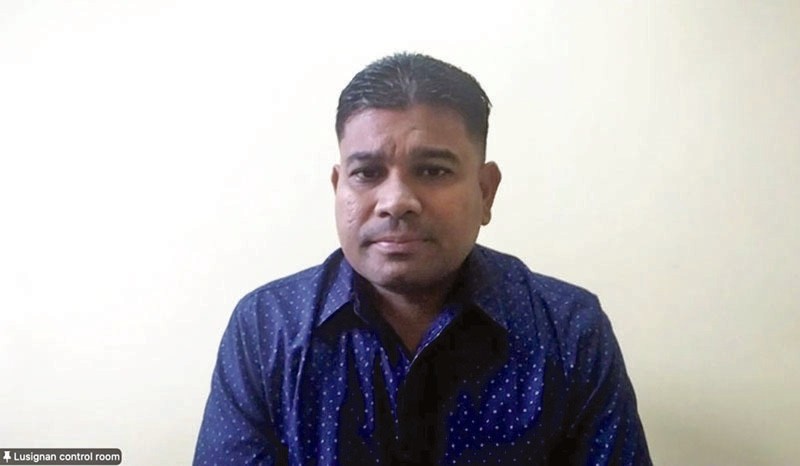
Opposition Leader Azruddin Mohamed asked Guyana’s High Court on November 26 to grant bail and declare his detention unconstitutional, alleging near-solitary confinement at Lusignan Prison.
Mohamed, who is under United States sanctions and faces federal criminal charges in Florida, filed the application one day after a magistrate refused him bail on cybercrime and misconduct-related charges, according to INews Guyana. The Attorney General and the Director of Prisons are the respondents.
What Mohamed’s lawyers allege about Lusignan Prison
In the filing, Mohamed said he had been held alone on his floor of the prison since October 30. He estimated that he spends 23 hours and 50 minutes each day in his cell, with limited sunlight, meaningful human contact and access to reading material.
His attorneys, Roysdale Forde, SC, Siand Dhurjon and Damien Da Silva, described the cell as windowless, excessively hot and poorly ventilated. They said continuous lighting interfered with his sleep, while smoke and fumes caused wheezing, headaches, nausea and general discomfort.
The application cites an incident on November 19 when Mohamed reportedly complained that he was struggling to breathe. His lawyers said the only medical attention he received was a blood-pressure check conducted through the cell door.
They argued that the restrictions exceed what Prison Rule 312(2) permits for untried prisoners. They also asked the court to assess his treatment under Rules 43 to 45 of the United Nations Standard Minimum Rules for the Treatment of Prisoners, known as the Nelson Mandela Rules.
Mohamed wants reasonable bail while the charges are determined. He is also seeking declarations that his continued detention violates his constitutional rights to personal liberty, the presumption of innocence and protection from inhumane or degrading treatment.
Why the magistrate refused bail
Magistrate Abigail Gibbs rejected Mohamed’s renewed application at the Sparendaam Magistrates’ Court on November 25. She found no material change in circumstances that would justify reversing her earlier decision.
The magistrate maintained that there were substantial grounds to believe Mohamed could commit another offence if released. She also concluded that bail conditions would not adequately address that risk.
His defence team disputes that assessment. The lawyers said he has no previous convictions and has complied with reporting and passport conditions imposed in other criminal proceedings.
They argued that prosecutors had not established grounds to believe he would interfere with witnesses, tamper with evidence, obstruct justice or commit another qualifying offence. Any concern about contact with witnesses, they said, could be addressed by barring him from communicating with Police Constable Ryan Greene and other prosecution witnesses.
The High Court therefore faces two separate questions: whether the state has justified keeping Mohamed in custody before trial, and whether prison authorities have treated him lawfully while he remains there. His political office and the American proceedings do not remove the need for either issue to be tested through evidence and open judicial reasoning.
The footage at the centre of the prosecution’s case
Mohamed faces the charges alongside Greene and Police Constable Ashton Chappelle. Police allege that the two constables obtained and transferred footage to Mohamed, who allegedly agreed to pay Greene $800,000 for a flash drive containing the recording.
Chappelle is accused of copying the footage without authorisation and giving the flash drive to Greene. Greene allegedly delivered it to Mohamed.
The recording captured an October 12 shooting outside the Barr Street, Kitty residence of Senior Superintendent of Police Prem Narine. The incident involved a vehicle occupied by Mohamed and two of his workers.
Mohamed denied paying for the footage or receiving anything from Greene in connection with the alleged misconduct. His lawyers also rejected the prosecution’s characterisation of the recording as national security information, arguing that it concerned a shooting and did not disclose sensitive material.
The defence further noted that Principal Magistrate Faith McGusty ordered police on October 16 to provide disclosure in a separate case involving Mohamed on firearms, ammunition and obstruction allegations. His lawyers argued that Greene’s alleged lack of authority to supply the footage did not, by itself, establish criminal wrongdoing by Mohamed.
Different bail outcomes for the co-accused
Greene was granted total bail of $300,000 on November 24 after prosecutors said they did not object to his release. They told the court that he was cooperating with investigators and was expected to testify against Mohamed.
Magistrate Gibbs set bail at $150,000 on the cybercrime charge and $150,000 on the misconduct in public office charge. Greene must surrender his passport and report to the Major Crime Unit at CID Headquarters on the second and fourth Mondays of each month.
Chappelle remains on remand after the court considered concerns about possible witness interference and the integrity of the investigation. The magistrate noted that his wife, a police officer stationed at the Command Centre, was also under investigation, while stressing that no finding of wrongdoing had been made against her.
Mohamed also remains in custody. Kaieteur News reported that his High Court application seeks both pretrial release and formal declarations that his fundamental rights have been violated.
A constitutional test for pretrial detention
The application places prison administration alongside bail law in the same constitutional dispute. Mohamed’s lawyers are asking the court to examine not only the risks cited by prosecutors, but also the daily conditions imposed on a prisoner who has not been tried on these charges.
For the authorities, the case will require a defence of both the decision to keep him confined and the restrictions described in the filing. For the defence, the contrasting treatment of Greene provides a factual backdrop, although the magistrate relied on different assessments of cooperation and risk for each accused man.
The High Court must now decide whether to admit Mohamed to reasonable bail and whether his detention and treatment at Lusignan Prison breach Article 141 of Guyana’s Constitution.