
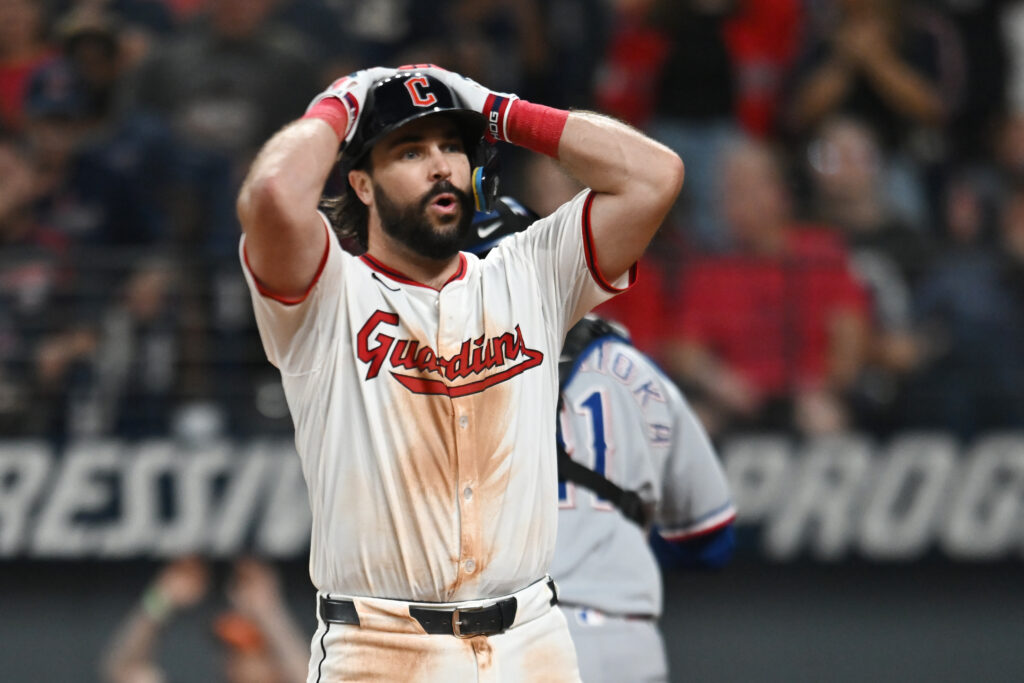
Cleveland Guardians' Frugal Offseason Strategy Defies Championship Logic
In a move that exemplifies the concerning trend of ownership groups prioritizing profit margins over competitive excellence, the Cleveland Guardians have entered the 2026 season with one of their lowest payrolls in over a decade, despite capturing the AL Central division title just months ago.
The Guardians' approach represents everything wrong with modern baseball economics. Rather than capitalizing on their improbable 2025 success with strategic investments, ownership has chosen the path of fiscal restraint that borders on negligence toward their fanbase and competitive obligations.
A Championship Window Wasted
Cleveland's 2025 campaign was nothing short of remarkable. After trailing Detroit for most of the summer, the Guardians rattled off a blistering 20-7 September record to claim their third AL Central title in four seasons. This Cinderella story should have served as a springboard for aggressive roster improvement, not an excuse for complacency.
Instead, the organization has chosen to field a team with a projected payroll of approximately $65 million, a figure that would make even the most cost-conscious small-market franchises blush. This represents a staggering retreat from their franchise-record $135 million payroll in 2018 and a significant drop from their recent $90-100 million range.
Offensive Inadequacy Ignored
The numbers paint a damning picture of Cleveland's offensive struggles in 2025. The team posted a collective .226/.296/.373 slash line, ranking 28th in runs scored and 29th in batting average, on-base percentage, and slugging percentage. Their 87 wRC+ indicated an offense 13% worse than league average.
José Ramirez and platooned first baseman Kyle Manzardo were the only regulars to achieve league-average offensive production. The remaining roster spots were filled by players whose combined .212/.280/.346 performance across 2,757 plate appearances represented a collective failure of talent evaluation and development.
Rather than address these glaring deficiencies through free agency or trades, Cleveland has chosen to double down on unproven prospects with concerning injury histories. Outfielders George Valera and Chase DeLauter have managed just 60 and 42 games respectively in 2025, hardly the foundation for a championship-caliber offense.
Misguided Financial Priorities
The organization's most significant move was extending Ramirez for four years and $106 million, a deal that actually reduced their 2026 payroll through deferred compensation. While securing their superstar was logical, the failure to reinvest those savings into roster improvements exposes the hollow nature of ownership's commitment to winning.
The Guardians' minimal additions include reuniting with defensive specialist Austin Hedges for $4 million and signing former Phillies first baseman Rhys Hoskins to a bargain $1.5 million deal. These moves represent band-aid solutions to systemic offensive problems.
Pitching Staff Provides Hope
The rotation featuring Gavin Williams, Tanner Bibee, Logan Allen, Parker Messick, Slade Cecconi, and Joey Cantillo offers competent depth, though none projects as a true ace. Williams' 3.06 ERA is misleading given his league-leading walk rate and concerning advanced metrics.
Bullpen additions Shawn Armstrong and Connor Brogdon represent low-risk signings that could pay dividends, particularly given Cleveland's track record of maximizing relief pitcher performance.
A Dangerous Gamble
The Guardians' strategy represents a dangerous gamble on organizational development over proven talent acquisition. Their championship hopes rest entirely on Ramirez maintaining his iron-man durability at age 33 and multiple injury-prone prospects simultaneously breaking out at the major league level.
This approach might be understandable for a rebuilding franchise, but for a division champion with minimal long-term commitments, it represents a failure of organizational ambition. The front office, led by Chris Antonetti, has essentially punted on their competitive window in favor of maintaining artificially low payroll levels.
Cleveland fans deserve better than this calculated mediocrity. In a sport where competitive balance remains achievable through intelligent spending, the Guardians have chosen the path of financial conservatism that prioritizes ownership profits over championship aspirations.
The 2026 season will serve as a referendum on this philosophy, but early indicators suggest Cleveland has squandered a golden opportunity to build upon their surprising 2025 success.